



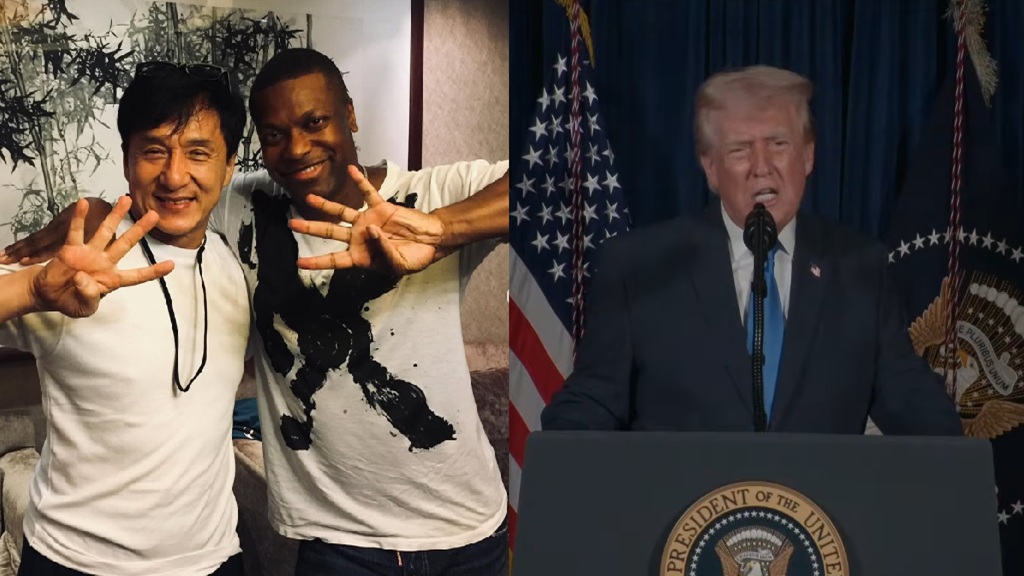
“Rush Hour 4” is now in active development at Paramount Pictures after Donald Trump personally urged the studio to move forward with the long-discussed sequel, according to multiple industry reports.
The agreement comes in the immediate wake of Paramount’s $8 billion merger with Skydance Media, a deal that required regulatory review by the Trump administration. While not explicitly conditional, observers note that the timeline suggests the president’s influence over the studio’s creative pipeline expanded significantly during the negotiation period.
Trump also reportedly pushed for a revival of the 1988 martial arts film “Bloodsport,” signaling a presidential endorsement of two franchises that have long drawn criticism for their reliance on racial stereotypes and dated cultural caricatures.
How Trump got involved
The current version of “Rush Hour 4” is being packaged with original stars Jackie Chan and Chris Tucker, ending years of speculation regarding the franchise’s future. Chan confirmed earlier this year that a script was in active development, stating that the project needed to “hurry up” before the cast became “old men,” though the film lacked a studio greenlight until now.
Paramount’s decision to take on distribution is highly unusual, as the “Rush Hour” franchise is owned by Warner Bros. and New Line Cinema. Industry reporting indicates that Warner Bros. had previously declined to move forward with the project, leading Paramount to step in as the distributor only after Trump made direct requests to Skydance CEO David Ellison.
The project also marks the return of director Brett Ratner, who helmed the original trilogy. Ratner’s career has been effectively frozen since 2017 following widely publicized allegations of sexual misconduct. His attachment to the project, facilitated by the reorganized studio leadership following the Trump conversations, marks a significant shift in industry standards regarding figures previously sidelined by the #MeToo movement.
Films with complicated histories
Both franchises face a different cultural landscape than when they premiered. “Rush Hour” has long been viewed through a mixed lens by Asian and Asian American audiences. While the films were instrumental in cementing Jackie Chan’s stardom in the U.S., they relied heavily on a specific brand of late 1990s racial comedy. Critics have noted that the humor frequently depended on exaggerated stereotypes, linguistic confusion and the “othering” of Asian culture for comedic effect, rather than the character depth seen in modern ensembles.
“Bloodsport” carries arguably heavier baggage. While credited with popularizing tournament-style martial arts cinema in the West, the film has faced sustained criticism for its “White Savior” narrative and its depiction of non-white antagonists. Scholars have pointed to the film’s portrayal of Arab and Asian fighters as brutish or reductive, contrasting them against the American protagonist. The film’s emphasis on graphic, bone-breaking violence, once a staple of 1980s action, also faced scrutiny regarding how it frames masculinity and foreign combatants.
This story is part of The Rebel Yellow Newsletter — a bold weekly newsletter from the creators of NextShark, reclaiming our stories and celebrating Asian American voices.
Subscribe free to join the movement. If you love what we’re building, consider becoming a paid member — your support helps us grow our team, investigate impactful stories, and uplift our community.

Join the conversation+