



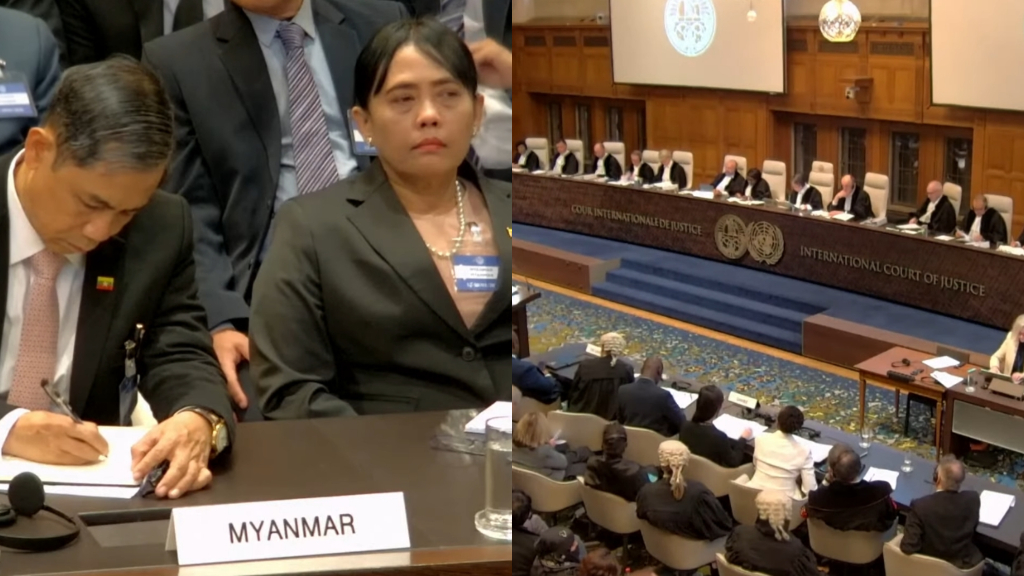
The International Court of Justice (ICJ) began hearing Gambia’s genocide case against Myanmar on Monday, with the West African nation accusing Myanmar of systematically destroying the Rohingya minority while the military government rejected the charges as legally and factually baseless.
State of play: The proceedings in The Hague mark the first full genocide trial the ICJ has undertaken in more than 10 years. Gambian Justice Minister Dawda Jallow told judges that the Rohingya “have been targeted for destruction,” saying Myanmar “turned their lives into a nightmare.” Two days later, Myanmar’s military government responded through its Foreign Ministry, saying the charges are unfounded and based on unreliable evidence. Notably, the statement avoided the term “Rohingya” and instead used “persons from Rakhine state.” Gambia will finish presenting evidence this Thursday, followed by Myanmar’s defense beginning Friday.
Why this matters: The case centers on Myanmar’s 2017 military campaign in Rakhine State that forced at least 730,000 Rohingya into Bangladesh, with refugees reporting killings, mass rape and villages burned. UN investigators concluded the operations included genocidal acts, but Myanmar rejected this finding and described its actions as counterterrorism operations against militant attacks. Nearly eight years later, about 1.17 million Rohingya live in dilapidated camps at Cox’s Bazar under worsening conditions, where more than 227,000 children lack access to education.
For Asian American communities with histories of exclusion and family experiences seeking refuge, the case underscores questions about supporting persecuted groups when governments deny documented abuses. Beyond Myanmar, the court’s decision will shape how genocide is legally defined and influence South Africa’s case against Israel over Gaza.
What’s next: Judges may issue a verdict within six to 12 months, though enforcement faces obstacles given Myanmar’s ongoing civil war since the 2021 coup. While the ICJ cannot directly enforce rulings, a decision favoring Gambia would increase political pressure on Myanmar’s military leadership, including its commander whose arrest the ICC prosecutor has requested for crimes against humanity tied to Rohingya persecution. Adding to the urgency, about 4,000 Myanmar nationals in the U.S. face deportation after the Trump administration ended their temporary protected status last November, citing improved conditions despite State Department warnings and continuing violence.
This story is part of The Rebel Yellow Newsletter — a bold weekly newsletter from the creators of NextShark, reclaiming our stories and celebrating Asian American voices.

Join the conversation+