



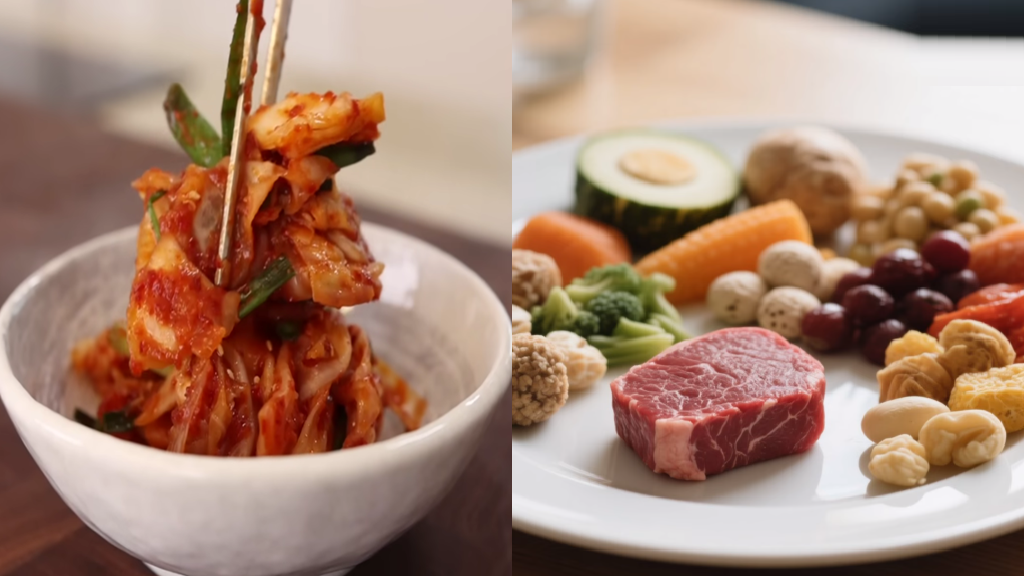
Kimchi is named for the first time in the U.S. Dietary Guidelines for Americans, appearing in a section that addresses fermented foods and gut health. The updated guidelines, released last week by the U.S. Department of Health and Human Services and the U.S. Department of Agriculture, outline recommended eating patterns that emphasize whole and minimally processed foods while calling for limits on ultra-processed products. The Korean staple, made from fermented vegetables such as napa cabbage and radish, is listed alongside sauerkraut and kefir in a technical section reviewing research on the gut microbiome and its links to digestion and immune response.
A superfood’s benefits: Research on kimchi and other fermented vegetables links their benefits to dietary fiber, vitamins A and C and microorganisms produced during fermentation that may support gut microbial diversity, digestion and immune response. Kimchi is often described by nutritionists as a “superfood” due to its nutrient density and fermentation process and observational studies have suggested that regular kimchi consumption may be associated with lower obesity risk.
Not all kimchi are made the same: These benefits, however, are more consistently found in traditionally fermented kimchi, which relies on longer fermentation periods and naturally occurring lactic acid bacteria associated with practices such as gimjang. It should be noted that many mass-produced kimchi products sold in the U.S. are fermented more quickly or heat-treated for shelf stability, processes that can reduce live cultures and alter fermentation byproducts, while also tending toward higher sodium levels and simplified ingredient profiles compared with traditional versions.
More than enough grains of salt: The updated guidelines were revealed by Health and Human Services Secretary Robert F. Kennedy Jr., whose leadership has drawn scrutiny over how scientific evidence is weighed in federal health policy. Since taking office, Kennedy has promoted expanded use of artificial intelligence across health agencies while urging Americans to “stop trusting experts,” questioned existing vaccine safety systems and faced criticism from federal scientists over research funding cuts and political interference.
This story is part of The Rebel Yellow Newsletter — a bold weekly newsletter from the creators of NextShark, reclaiming our stories and celebrating Asian American voices.
Subscribe free to join the movement. If you love what we’re building, consider becoming a paid member — your support helps us grow our team, investigate impactful stories, and uplift our community.

Join the conversation+