



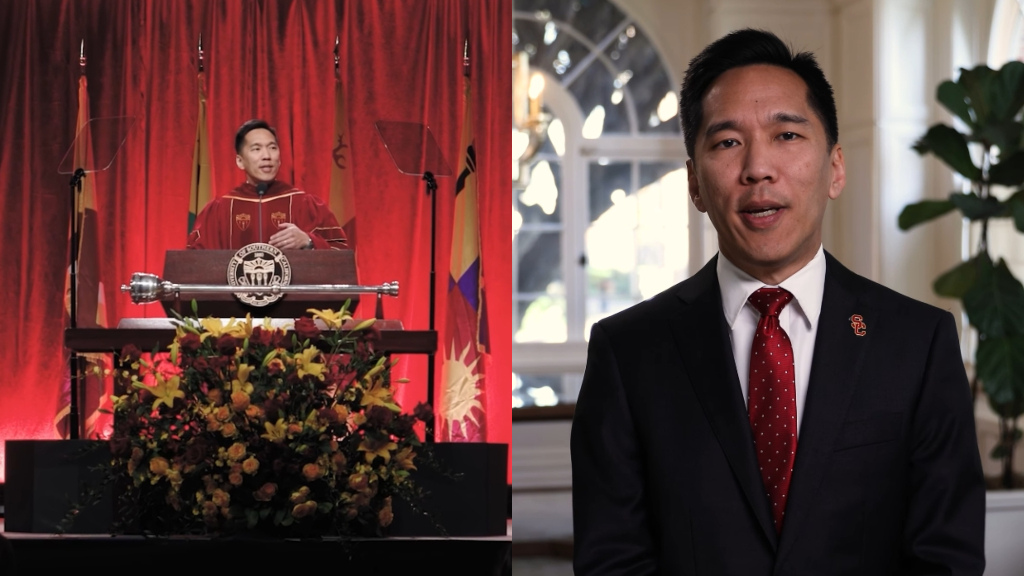
Beong-Soo Kim has been named the 13th president of the University of Southern California (USC), becoming the first Asian American and the institution’s first leader of color to hold the position permanently.
A new era: Kim, 53, was appointed after a seven-month interim stint that included difficult cost-cutting measures, which included eliminating over 1,000 positions to close a $200-million deficit. In announcing the trustees’ unanimous decision, Board Chair Suzanne Nora Johnson cited “widespread confidence in Beong’s leadership.”
Unlike most university presidents who rise through faculty ranks, Kim built his career in legal practice. Speaking to the campus in his State of the University address, he outlined his leadership approach, declaring, “This job is not about me. This job is about all of you, and my key responsibility is to always put the long-term mission and interest of the university first and foremost, above everything else — including myself.”
About Kim: Kim was born to Korean immigrants who pursued graduate studies at USC in the late 1960s, giving the appointment special meaning. He described it as an “amazing, full-circle moment,” recalling childhood campus visits for football and concerts. He earned undergraduate and law degrees from Harvard, plus a graduate degree from the London School of Economics.
Since becoming general counsel in July 2020, Kim has handled complicated matters including Varsity Blues fallout, pandemic decisions and last year’s pro-Palestinian demonstrations. During the pandemic years, Pasadena neighbors knew him for his cello concerts on his porch. Speaking to student publication Morning, Trojan, Kim calls his ethnicity “incredibly important part of my identity,” though he prefers to be judged “ultimately based on what I end up doing.”
Why this matters: Kim’s appointment holds significant historical weight given USC’s troubled past. When Japanese American students were sent to World War II internment camps, the university denied them their transcripts afterward, erasing their academic progress and forcing them to start over at other institutions. An Asian American now holding the institution’s highest office represents a dramatic reversal.
The appointment also comes as universities face escalating federal demands around admissions, with officials claiming discrimination against Asian American applicants, though many view this narrative as political cover for dismantling diversity efforts. Kim chose not to emphasize the historic nature of his selection, describing it as a personal decision. His approach reflects tensions faced by Asian American leaders navigating heightened scrutiny of diversity initiatives while asserting their qualifications stand on individual merit.
This story is part of The Rebel Yellow Newsletter — a bold weekly newsletter from the creators of NextShark, reclaiming our stories and celebrating Asian American voices.
Subscribe free to join the movement. If you love what we’re building, consider becoming a paid member — your support helps us grow our team, investigate impactful stories, and uplift our community.

Join the conversation+