



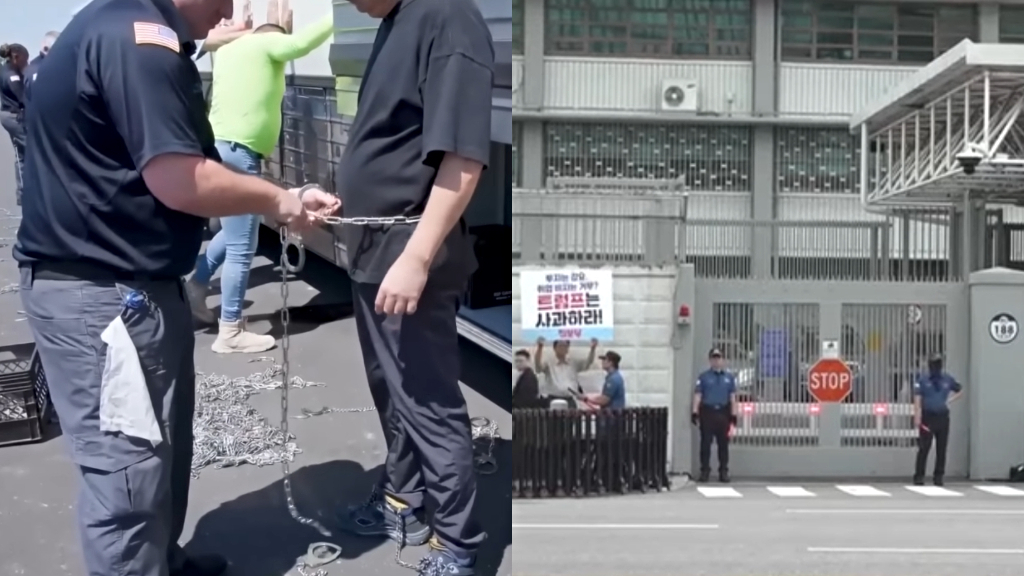
Washington and Seoul are taking steps to mend diplomatic and economic relations after September’s immigration raid that detained hundreds of South Korean workers at a battery plant in Georgia.
State of play: The State Department announced Friday that it has expanded visa processing capacity at the U.S. Embassy in Seoul, adding more than 5,000 interview slots above normal levels in recent weeks to process applications from South Korean business travelers. The 317 Korean workers detained in the Sept. 4 raid have been offered the opportunity to return to the Hyundai Motor Group and LG Energy Solution battery plant in Ellabell, with the State Department reissuing visas and encouraging applications for B-1 short-term business visas.
Why this matters: The raid has raised concerns about selective targeting and questions about which immigrant workers receive protection based on their countries’ economic leverage. Trump’s shift from initially defending the raid to later supporting specialized foreign workers demonstrates how Asian American communities and Asian nations occupy a complex position in U.S. immigration debates. The contrast also reveals the precarious status of all foreign workers, regardless of their employers’ investments or home countries’ strategic importance.
Broader implications: The latest developments indicate contradictions in the Trump administration’s approach to immigration and economic policy, which simultaneously demands domestic hiring while acknowledging gaps in specialized manufacturing skills. In October, Trump told reporters he was “very much opposed” to the raid. He later explained at a November investment forum that batteries are complex and dangerous to make, justifying the need for South Korean expertise. Despite these reconciliation efforts, nearly 200 detained workers intend to sue ICE over claims of wrongful arrest, racial profiling and human rights abuses.
The resolution may establish a precedent for how the U.S. handles foreign workers from allied nations with major investments, potentially creating a two-tiered system where economic power shields some immigrants while others face strict enforcement.
This story is part of The Rebel Yellow Newsletter — a bold weekly newsletter from the creators of NextShark, reclaiming our stories and celebrating Asian American voices.
Subscribe free to join the movement. If you love what we’re building, consider becoming a paid member — your support helps us grow our team, investigate impactful stories, and uplift our community.

Join the conversation+