



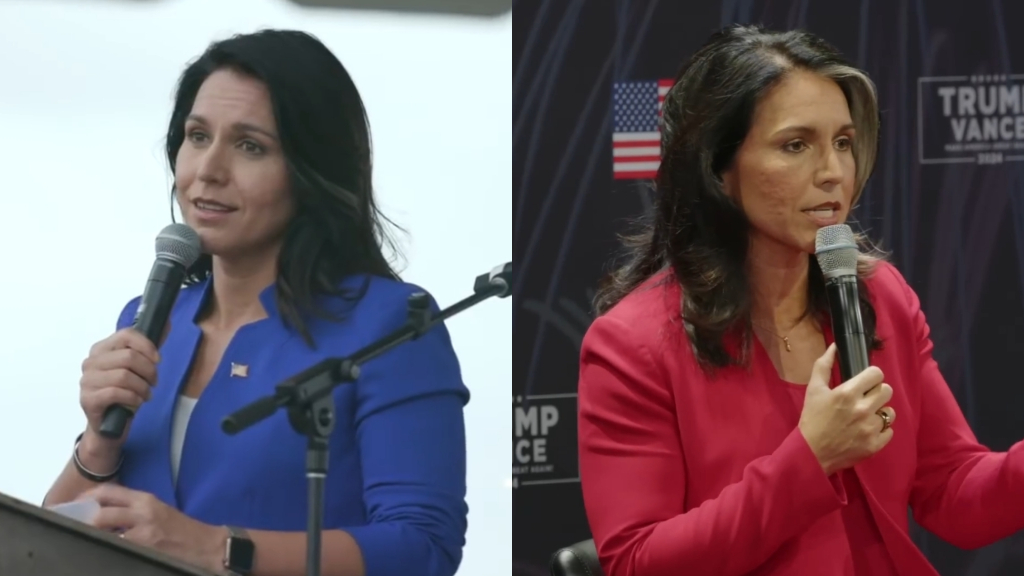
Director of National Intelligence Tulsi Gabbard faces renewed scrutiny over her 2019 statements against U.S. intervention in Venezuela following the Trump administration’s capture of former Venezuelan President Nicolás Maduro over the weekend.
Change of heart: As a Hawaii Democratic congresswoman in 2019, Gabbard wrote that the U.S. “needs to stay out of Venezuela” and should “let the Venezuelan people determine their future.” At the time, she was responding to the humanitarian crisis as U.S.-backed opposition leader Juan Guaido challenged Maduro’s government. In a separate post, she warned that “civil war/military intervention in Venezuela will wreak death and destruction to Venezuelan people” and pointed to America’s troubled history of regime change.
She also appeared on Fox News to criticize what she called the original Trump administration’s movement toward “yet another wasteful counterproductive regime change war.” Now, holding a top intelligence position in that same president’s second administration, she has not publicly commented on Trump’s declaration that America will “run” Venezuela and rebuild its energy sector, precisely the type of intervention she previously opposed.
Zoom out: The MAGA movement’s limited criticism of Venezuela contrasts sharply with its response to other recent foreign operations. Just last summer, Tucker Carlson, Steve Bannon and other prominent figures vocally opposed Trump’s support for Israeli attacks on Iran’s nuclear program, yet the Venezuela mission has drawn sustained criticism mainly from marginal voices. Former Rep. Marjorie Taylor Greene, who recently broke up with Trump and MAGA, wrote that “this is what many in MAGA thought they voted to end,” but most allies have rallied behind the president.
The justifications they’ve offered vary considerably. Secretary of State Marco Rubio characterized the mission as “a law enforcement function” tied to drug charges against Maduro, while others, as per Politico, cite the “Donroe Doctrine” emphasizing U.S. dominance in the Western Hemisphere. Matt Boyle of Breitbart News told Axios it was “a quick and decisive military and law enforcement action — not a long, drawn-out war,” while podcaster Jack Posobiec noted that “‘America First’ never meant isolationist.” The varied explanations suggest the movement’s principles bend to accommodate Trump’s actions rather than constrain them.
What this means: For Asian American voters, Gabbard’s trajectory carries particular weight. As one of the most prominent AAPIs in national politics today, her silence on policies that contradict her past positions raises questions about representation versus principle. Many Asian American voters supported her antiwar stance rooted in her Iraq War military service, viewing her opposition to regime change as a core conviction. Yet she now holds senior rank in an administration conducting the very operations she once opposed, illustrating how political ambition can override stated principles. Ultimately, this is a cautionary lesson for communities that have historically prioritized candidates promising diplomatic engagement over military intervention.
This story is part of The Rebel Yellow Newsletter — a bold weekly newsletter from the creators of NextShark, reclaiming our stories and celebrating Asian American voices.
Subscribe free to join the movement. If you love what we’re building, consider becoming a paid member — your support helps us grow our team, investigate impactful stories, and uplift our community.

Join the conversation+