



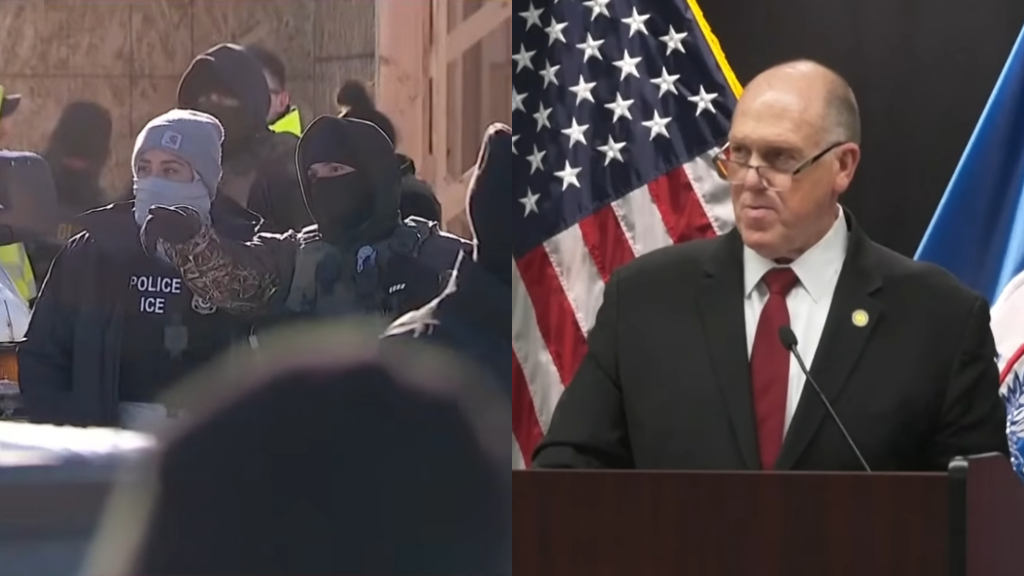
Border czar Tom Homan announced Wednesday that 700 federal immigration officers are leaving Minnesota effective immediately, a 25% reduction in deployment prompted by growing backlash over the killing of two U.S. citizens during enforcement operations.
State of play: The drawdown follows a weeks-long crisis that began with an Immigration and Customs Enforcement (ICE) agent fatally shooting Renee Good on Jan. 7 and worsened with the subsequent killing of Alex Pretti on Jan. 24. The administration had deployed roughly 2,800 officers to Minnesota in what it called the “largest immigration enforcement operation ever” before President Donald Trump replaced operation chief Gregory Bovino with Homan shortly after Pretti’s death. Speaking to NBC Wednesday, Trump dialed down on his administration’s characterizations of the slain, saying “maybe we can use a little bit of a softer touch,” though he still described both victims as “not angels.”
Despite the drawdown, around 2,000 federal immigration personnel will remain in Minnesota, 13 times higher than the state’s normal deployment of 150 officers. Homan credited what he called “unprecedented collaboration” from county sheriffs who have agreed to notify ICE before releasing undocumented immigrants. He also announced body cameras will be distributed to immigration officers nationwide.
Why this matters: The Minnesota crisis has intensified concerns already building within Asian American communities since the beginning of the second Trump administration. Between March and fall of last year, opposition to Trump’s immigration policies among Asian Americans rose from 58% to around 70%, according to AAPI Data and AP-NORC polling, while a separate AtlasIntel survey found Asian American voter support for Trump dropping from 57% in July to 26% by September. Needless to say, the deadly shootings in Minnesota represent a new escalation that has crystallized longstanding fears about enforcement overreach.
Anxieties extend beyond immigration status itself. Asian American communities worry that militarized enforcement tactics and expanded federal powers threaten constitutional protections for legal residents and citizens navigating a system where racial profiling and documentation demands have historically affected them disproportionately.
When federal agents killed Pretti in late January, Asian American lawmakers responded forcefully. Rep. Ro Khanna (D-Calif.) attended his vigil and called ICE “a rogue, militarized police,” while Sen. Tammy Duckworth (D-Ill.) introduced legislation requiring independent investigations into federal use of force. Their reaction underscores how aggressive enforcement, regardless of stated targets, erodes community trust in the federal authorities many AAPI families must interact with for immigration matters.
Growing unpopularity: The Minnesota operation has clearly damaged Trump politically across multiple fronts. A new NPR/Marist poll shows his approval rating at 39%, dragged down by independents, Latinos and younger voters who previously backed him in 2024, while Pew Research recorded 37% approval. Meanwhile, 65% of Americans now say ICE has “gone too far,” up 11 points since last summer.
The shootings have also fueled skepticism about the administration’s credibility. A new Quinnipiac University survey found that 60% distrust the administration’s account of Pretti’s death, while 59% see both killings as indicative of systemic failures within enforcement operations. Homeland Security Secretary Kristi Noem faces particularly sharp criticism, with 58% wanting her removed after she circulated inaccurate information about the victims.
Trump’s own acknowledgment that a “softer touch” might be needed signals the administration recognizes its hardline approach has backfired. Any further drawdowns, however, depend on counties continuing to cooperate and demonstrators ending interference with arrests, Homan said, though some legal analysts warn Minnesota counties risk litigation if they work with ICE.
This story is part of The Rebel Yellow Newsletter — a bold weekly newsletter from the creators of NextShark, reclaiming our stories and celebrating Asian American voices.
Subscribe free to join the movement. If you love what we’re building, consider becoming a paid member — your support helps us grow our team, investigate impactful stories, and uplift our community.

Join the conversation+