



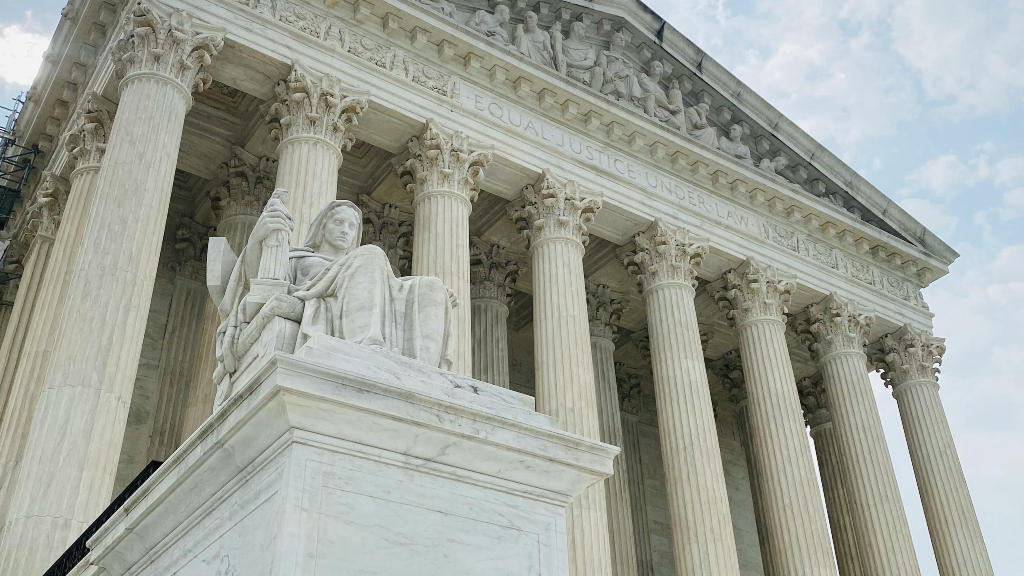
Republican-appointed Supreme Court justices now rule for wealthy parties 70% of the time, up from roughly 45% seven decades ago, according to new economic research analyzing thousands of cases.
Key findings: Economists from Yale and Columbia universities examined economic disputes dating back to 1953 for their working paper “Ruling for the Rich,” which was released Monday through the National Bureau of Economic Research (NBER). The researchers classified rulings as favoring wealth when they backed employers over employees, corporations over consumers, or private interests over regulatory agencies. By 2022, Democratic appointees sided with wealthy parties just 35% of the time, creating a 47-percentage-point partisan divide.
The findings validate Justice Ketanji Brown Jackson’s June 2025 dissent, in which she wrote that “moneyed interests enjoy an easier road to relief in this court than ordinary citizens.” The perception has taken a toll on public confidence. According to the Pew Research Center, the court’s favorability dropped to 48% in late 2024 from 70% in 2020, and 56% of Americans now say justices do a poor job keeping politics out of their decisions — even though 86% believe they should be nonpartisan.
What this means: The study’s findings carry particular weight for Asian American families, who face economic vulnerability despite the “model minority” myth. When the court systematically favors employers over workers and corporations over consumers, it undermines protections for the disproportionate number of Asian Americans in precarious employment, from service workers to visa holders in tech and healthcare facing potential deportation. The 47-percentage-point partisan gap suggests that legal outcomes increasingly depend on which justices hear a case rather than the merits of the argument itself.
This pattern raises concerns about equal justice for communities already navigating systemic barriers. The court’s reported pro-wealthy bias extends beyond economic cases into civil rights, where similar deference to powerful interests appears. California Atty. Gen. Rob Bonta, the first Filipino American to hold the position, observed this dynamic after a September 2025 ruling allowed racial profiling in immigration enforcement, saying, “How they prevent the use of race to tackle discrimination, but allow the use of race to potentially discriminate is troubling. Now, we see that whether in labor disputes or immigration cases, the current court consistently sides with those holding power.”
The big picture: The researchers argue that economic outcomes predict Supreme Court rulings better than stated philosophies like originalism. Their study notes that “making the rich richer may not be an ideology that is easily justifiable to ordinary citizens, but does a better job at explaining decisions than theories of statutory or constitutional interpretation.” This trend poses challenges for redistributive policies like Mayor Zohran Mamdani’s proposal to fund universal childcare and affordable housing through taxes on New York City’s wealthiest residents.
This story is part of The Rebel Yellow Newsletter — a bold weekly newsletter from the creators of NextShark, reclaiming our stories and celebrating Asian American voices.
Subscribe free to join the movement. If you love what we’re building, consider becoming a paid member — your support helps us grow our team, investigate impactful stories, and uplift our community.

Join the conversation+