Sponsored posts on SFWeekly promote ‘Oriental brides’ with natural ‘attraction to foreign men’


New sponsored posts appearing in SFWeekly, the online version of the recently closed periodical of the same name in San Francisco, are perpetuating Asian stereotypes in order to promote mail-order bride websites.
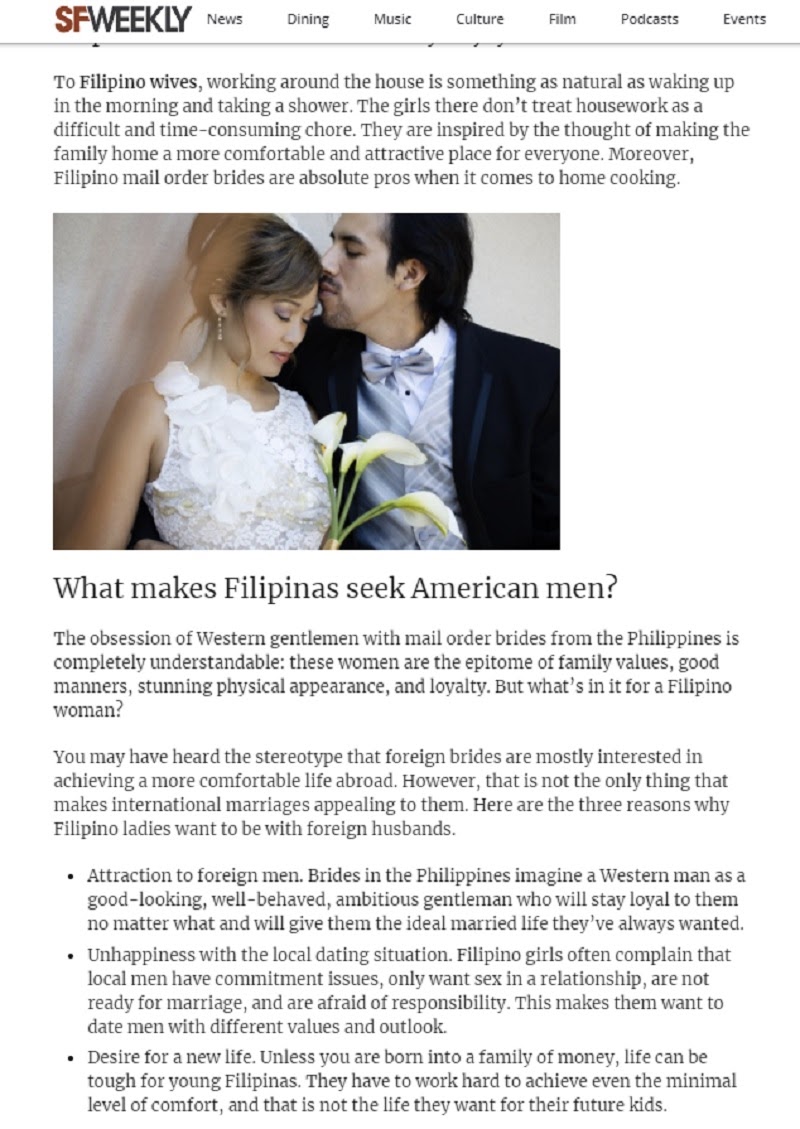
Depiction of Filipino women: Recent paid articles published in October on SFWeekly promote Filipino wives who “actually enjoy housework.”
- A post published on Oct. 19, titled “Filipino Mail Order Brides: A Guide To Philippines Brides,” claims Filipino women are “loyal to their core,” “can’t wait to become [mothers]” and are “absolute pros when it comes to home cooking.”
- According to the post, wives from the Philippines treat housework as something “as natural as waking up in the morning and taking a shower.”
- In addition to wanting to achieve “a more comfortable life abroad,” the post claims that Filipino women seek American men because they have a natural “attraction to foreign men.”
- The post further notes how Filipino women complain about local men and imagine that Western men can “give them the ideal married life they’ve always wanted.”
- What the post failed to include, however, is the fact that mail-order brides are illegal in the Philippines.
Depiction of Japanese women: SFWeekly also posted about Japanese women who “can fulfill the most unexpected desires.”
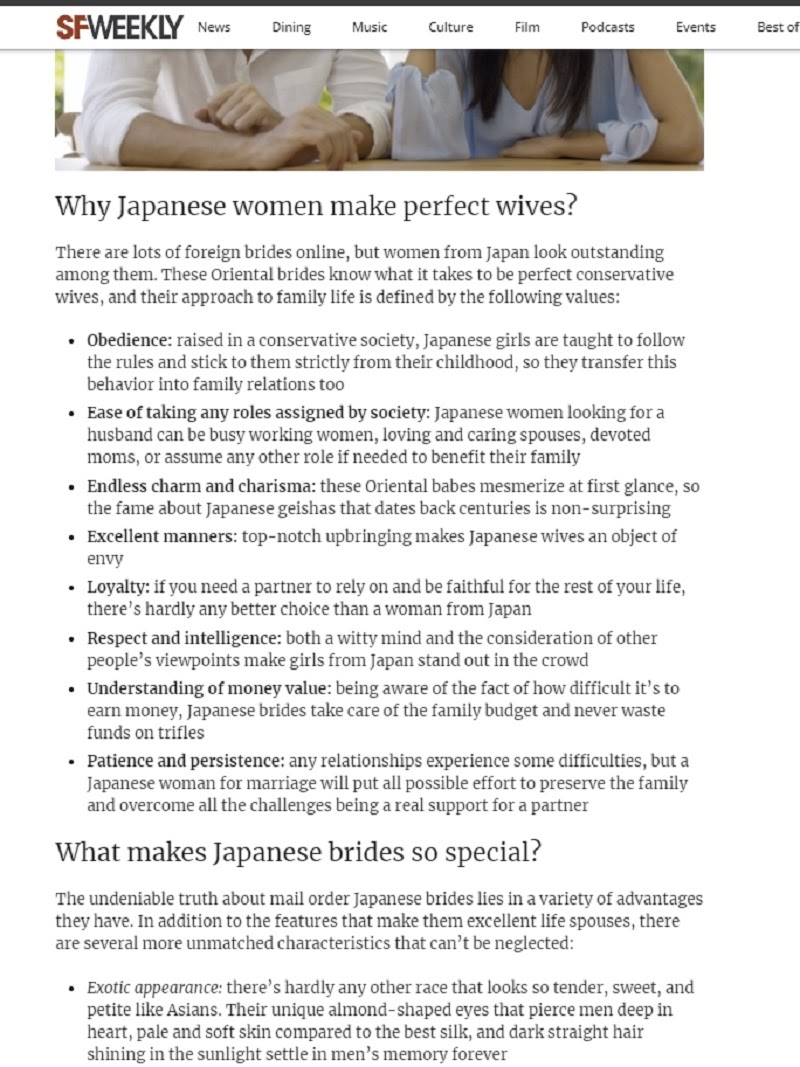
- In an Oct. 25 post, titled “How To Meet Japanese Women For Marriage On A Japanese Wife Finder,” Japanese women are described as “Oriental brides” who know “what it takes to be perfect conservative wives.”
- The post claims that Japanese women “assume any other role if needed to benefit their family.”
- According to the post, women from Japan also “remain beautiful and good-looking for years” and possess a sexual nature that “has no borders when the sun goes down.”
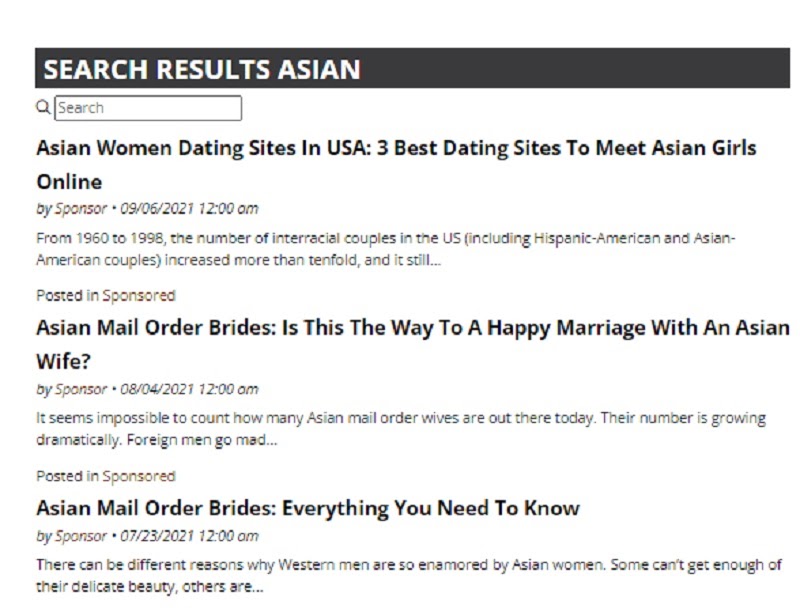
- Multiple other posts, such as “Japanese Mail Order Brides: Hot Japanese Women for Marriage” and “Japanese Mail Order Brides: Why Are Japan Brides Like This?” on the site repeat the same narrative of the submissive Asian wife.
- Additionally, in “Best Countries To Find A Wife: Meet Mail Order Bride Who Match Your Taste,” Asian brides are touted as women who “know everything about raising children, being feminine and surrounding their men with care and affection.”
Why it’s a problem: Sponsored posts, a type of marketing in which advertisers pay a publication to publish their material, are often created outside a publication’s typical editorial process but typically still go through internal screening before publication.
- The sexualized and submissive stereotypes of Asian women have historically led to sexual objectification and violence, according to the National Network to End Domestic Violence (NNEDV).
- An article by the Public Interest Law Reporter further points out that “mail order brides are often subject to physical and sexual abuse once they arrive in the U.S., which they are especially vulnerable to due to their immigration status.”
- One of the most prominent cases of such abuse was the murder of 25-year-old Susana Remerata Blackwell by her 47-year-old husband Timothy Blackwell in 1995.
- Following multiple other cases of abuse, the U.S. Congress passed the Federal International Marriage Broker Regulation Act a decade later in 2005, requiring all marriage visa sponsors to undergo background checks. This act also puts a limit on visa applications.
SF Weekly stopped its regular reporting at the end of September following an earlier announcement that the long-running publication will cease activity indefinitely, reported SFGate. But while some of the questionable content appeared weeks after the closure, it is worth noting that the publication has hosted similar sponsored posts in the past.
NextShark has reached out to SFWeekly for comments.
Featured Image via SFWeekly