



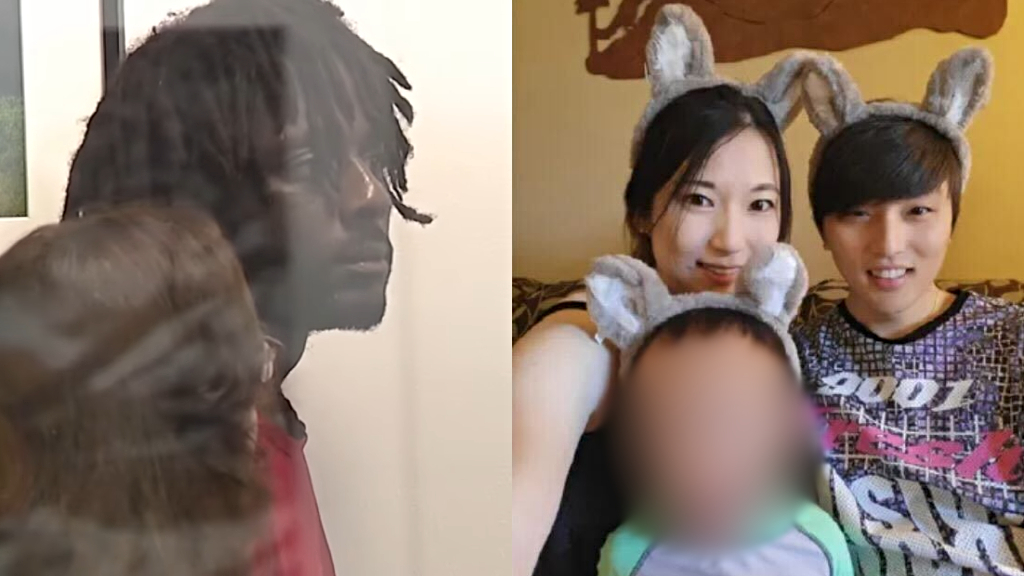
A man who fatally shot a pregnant woman in Seattle nearly three years ago was found not guilty due to insanity on Friday.
Catch up: Eina Kwon, 34, and her husband, Sung Kwon, 37, co-owners of Aburiya Bento House in Seattle’s Belltown neighborhood, were heading to work on June 13, 2023, when Cordell Goosby ran toward their white Tesla during a red light at Fourth Avenue and Lenora Street and opened fire. Eina, who was eight months pregnant, was transported to Harborview Medical Center, where she gave birth via emergency C-section before dying.
The baby, who was named Evelyn, initially survived but also died. When questioned by detectives later, Goosby said he believed the shooting was a “paid hit” and reported hearing voices “all day, every day, it’s nonstop.”
Verdict: Both a defense expert and an independent prosecution expert determined that Goosby was insane at the time of the shooting. Nationwide, the insanity defense succeeds only 25% of the time it is invoked in felony cases, making such outcomes rare. “Both came to the same conclusion that he was insane at the time of the crime,” Gabrielle Charlton, a senior deputy prosecutor, told KING 5 News.
Court documents also show that Goosby acknowledged committing the act. He will now be confined to Western State Hospital for up to life, with the King County Superior Court overseeing his case.
Justice system challenged: The verdict has reignited debate over Washington state’s “born alive” standard, which was rooted in a 2012 Court of Appeals ruling and prevented prosecutors from charging Goosby in Evelyn’s death. Prosecutors also ruled out a manslaughter charge after finding no evidence that Goosby knew Eina was pregnant, as state law would have required.
Understandably, the case has sparked debates in Asian American communities and beyond. Advocates are now calling for “Evelyn’s Law,” noting that at least 35 other states treat an unborn child as a homicide victim. This illustrates how mental illness, evidentiary constraints and entrenched legal precedent can collectively deny families the accountability they sought.
Any move toward Goosby’s release from psychiatric custody would require a multi-step review process, including court oversight, during which prosecutors retain the right to object.
This story is part of The Rebel Yellow Newsletter — a bold newsletter from the creators of NextShark, reclaiming our stories and celebrating Asian American voices.
Subscribe free to join the movement. If you love what we’re building, consider becoming a paid member — your support helps us grow our team, investigate impactful stories, and uplift our community.

Join the conversation+