



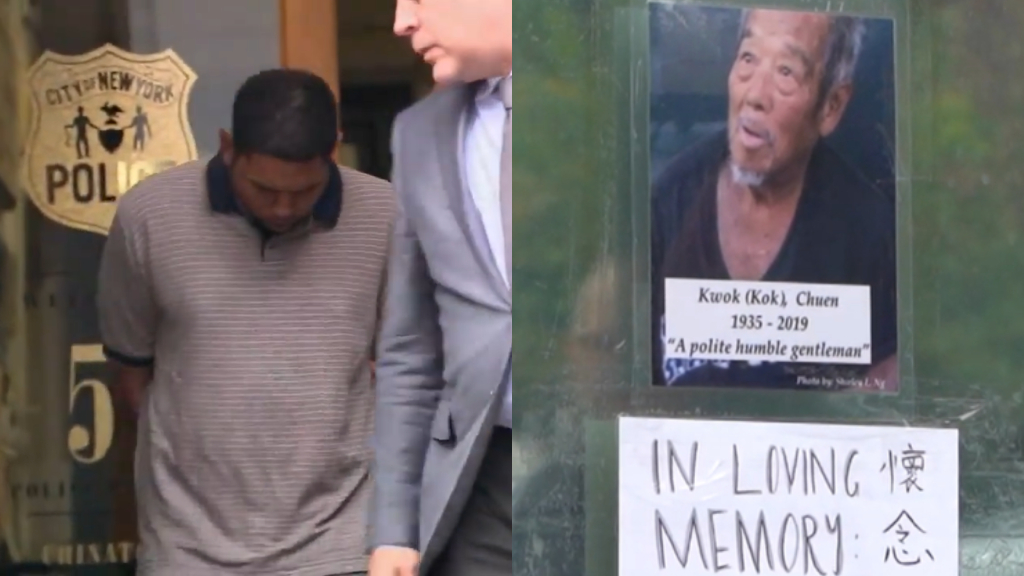
A transient man on trial for bludgeoning four sleeping men to death in Manhattan’s Chinatown in 2019 asserted an insanity defense last week, with his lawyer arguing he heard voices commanding him to kill 40 people or die himself.
Catch up: Randy Santos, now 31, is charged with first-degree murder for allegedly killing Chuen Kwok, Anthony Manson, Florencio Moran and Nazario Vásquez Villegas on Oct. 5, 2019. Prosecutors say he went hunting for a weapon before finding a 15-pound metal bar and delivering repeated blows to the victims’ skulls in their sleep. About a week before the killings, he also allegedly attacked another man with a wooden stick in Chelsea in what prosecutors called a “trial run,” though that victim survived.
Santos, who was born in the Dominican Republic and immigrated to New York during childhood, had accumulated at least six arrests with increasingly violent behavior. He was released from jail in August 2019 after nonprofits posted bail in earlier cases, including a sexual abuse charge.
Latest developments: Defense attorney Marnie Zien told jurors that Santos received a schizophrenia diagnosis while incarcerated just before the attacks and “lacked the substantial capacity to know and appreciate” that his actions were wrong. Though released with mental health resources and medication, he failed to follow through. “It’s incomprehensible, but it was real to Randy,” Zien said, explaining that in his “distorted, diseased mind,” Santos believed killing was necessary to save his life.
On the other hand, prosecutors countered that Santos knew exactly what he was doing, pointing to surveillance showing him checking his surroundings to ensure “the coast was clear” and waiting for a witness to pass before continuing his assault. The prosecution also presented DNA evidence linking Santos to the weapon and noted he recognized himself in surveillance footage, telling police after his arrest, “Yea, that’s me.” The defense still confronts significant legal hurdles, however, because in New York, arguing for insanity requires proof that defendants could not grasp their actions’ consequences or distinguish right from wrong.
What this means for Asian Americans: The 2019 incident sparked fear among New York’s unhoused population and exposed vulnerabilities within the Asian American community, particularly among Chinatown’s homeless. It reveals how people fall through cracks of city agencies when grappling with mental illness, a systemic failure disproportionately impacting marginalized communities. Needless to say, this underscores the urgent need for mental health infrastructure and culturally competent services.
The trial is expected to continue for two weeks. If convicted, Santos faces life without parole, but if the insanity defense succeeds, he will be sent to a psychiatric facility.
This story is part of The Rebel Yellow Newsletter — a bold weekly newsletter from the creators of NextShark, reclaiming our stories and celebrating Asian American voices.
Subscribe free to join the movement. If you love what we’re building, consider becoming a paid member — your support helps us grow our team, investigate impactful stories, and uplift our community.

Join the conversation+