



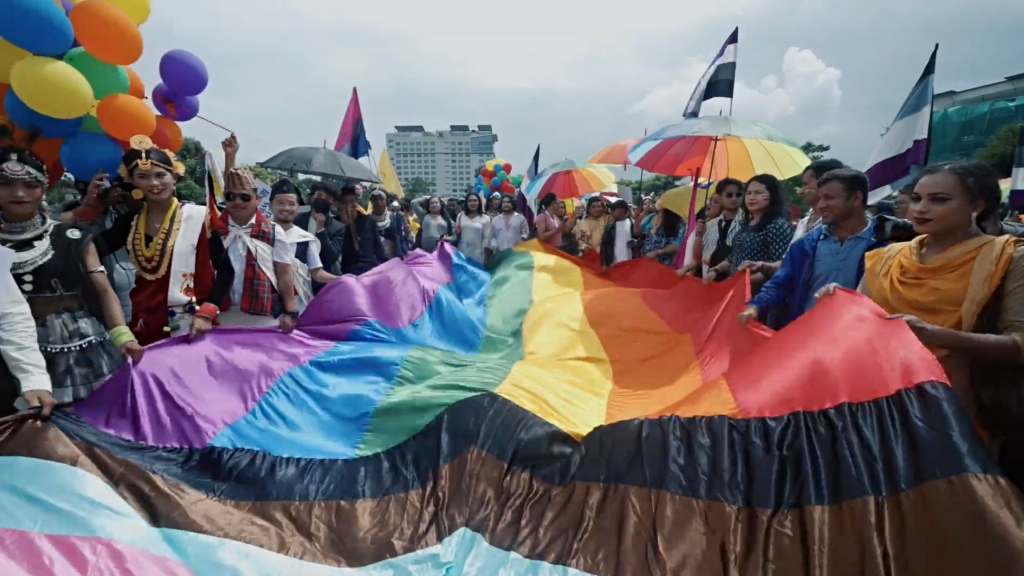
Nepal’s Supreme Court has issued a final ruling affirming marriage equality as a constitutional right, making the Himalayan nation the first in South Asia to legally recognize same-sex unions, and the third in Asia after Taiwan and Thailand.
Latest developments
The court’s June 18 decision secures Nepali LGBTQ+ couples’ right to marry in the future. The ruling is the latest in a series of decisions, most recently a 2023 interim order triggered when nine LGBTQ+ activists sued over marriage statutes that restricted unions to men and women. That order established a temporary marriage registration process for gender minority couples, though the registrations were provisional and did not carry the full legal protections of marriage.
Last week’s ruling converts that provisional recognition into a binding constitutional guarantee. As we have reported, that interim order led to the country’s first same-sex marriage registration in November 2023, when Surendra Pandey and Maya Gurung, who had been together nine years, formalized their union at the municipal office of Dordi in Lamjung district.
Human rights activist and Blue Diamond Society founder Sunil Babu Pant welcomed the latest decision, telling Nepali nonprofit Pahichan, “This landmark ruling marks a historic milestone for equality, dignity, and human rights in Nepal, while providing crucial legal clarity and protection for the rights of same-sex couples.” The group added that the ruling marks the fourth Supreme Court decision over nearly two decades affirming that the freedom to marry is guaranteed under Nepal’s Constitution.
Progress made
The latest ruling is the product of nearly two decades of litigation. A 2007 Supreme Court decision established LGBTQ+ rights as fundamental under Nepali law, directing the state to dismantle discrimination based on sexual orientation and gender identity. In the years after, the government formally recognized a “third gender” category in citizenship documents by 2013 and extended it to passports by 2015. Then, the 2015 constitution explicitly recognized gender and sexual minorities as a protected category, considered among the most progressive such provisions in Asia.
On the political front, the March 5 elections brought Bhumika Shrestha of the Rastriya Swatantra Party into Parliament as Nepal’s first transgender lawmaker. Shortly after, Prime Minister Balendra Shah’s government renamed its women’s ministry to formally include “Gender and Sexual Minorities” in its remit, giving the community a dedicated ministry for the first time in the country’s governance structure. Trans activist Sammon Chhetri, who has pushed for policy change at the local level, welcomed the development. “The doors are open for our work,” he told the Kathmandu Post.
Why this matters
Nepal is the only country in South Asia where same-sex couples can legally marry, as neighboring governments continue to criminalize or sideline LGBTQ+ rights entirely. For Asian Americans with South Asian roots, this month’s ruling confirms that marriage equality in Nepal is grounded in constitutional law, not contingent on shifting political will.
Still, court rulings and daily reality have not kept pace. Despite a 2024 directive from the Ministry of Home Affairs instructing local offices nationwide to register same-sex unions, many ward officials have not complied. Meanwhile, queer Nepalis outside urban centers reportedly continue to face bureaucratic obstruction and institutional resistance.
This story is part of The Rebel Yellow Newsletter — a bold newsletter from the creators of NextShark, reclaiming our stories and celebrating Asian American voices.
Subscribe free to join the movement. If you love what we’re building, consider becoming a paid member — your support helps us grow our team, investigate impactful stories, and uplift our community.

Join the conversation+