


Article

Balkanatolia: Lost continent allowed Asian animals to colonize Europe 34 million years ago, researchers say

Balkanatolia
  • A team of paleontologists and geologists led by the French National Center for Scientific Research discovered a lost continent they named Balkanatolia, which is believed to have been the staging post for Asian mammals to cross over to Europe approximately 34 million years ago.

  • The continent was home to now extinct species of mammals different from those of Europe and Asia about 50 million years ago.

  • Balkanatolia, which is believed to have connected present-day Europe, Asia and Africa, became connected to Western Europe as a result of geographical glacial changes approximately 34 million years ago, leading to the colonization of the Asian mammals in Europe.

Asian America Daily - in under 5 minutes

Get our collection of Asian America's most essential stories, to your inbox daily, for free!

Unsure? Check out our Newsletter Archive

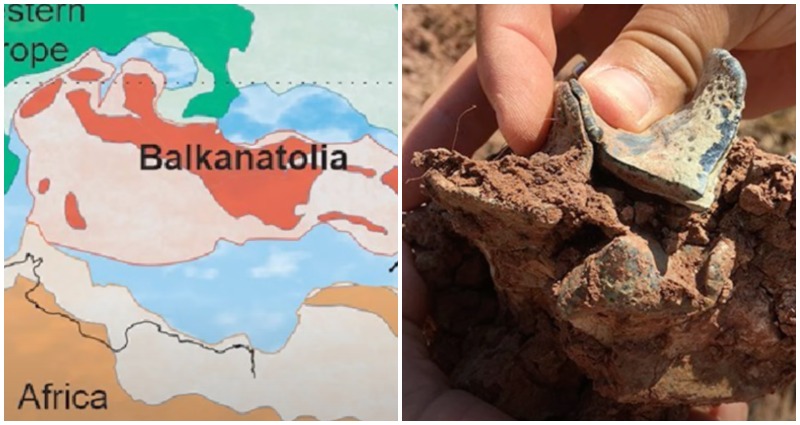
A team of paleontologists discovered a forgotten continent which is believed to be the land that helped mammals from Asia cross over to Europe approximately 34 million years ago.

The team of French, American and Turkish paleontologists and geologists led by the French National Center for Scientific Research (CNRS) researchers reassessed geological data relating to the Eocene region, which now belongs to the present-day Balkans, Europe and Anatolia, Turkey.

Their research suggested that the continent, which once sat among Europe, Asia and Africa, became the staging post for Asian mammals to migrate into Europe. The researchers have named the region Balkanatolia, according to the findings published in the March 2022 volume of Earth-Science Reviews

“We know that, around 34 million years ago, Western Europe was colonized by Asian species, leading to a major renewal of vertebrate fauna and extinction of its endemic mammals, a sudden event called the ‘Grande Coupure,’” the CRNS said in a statement. “Surprisingly, fossils found in the Balkans point to the presence of Asian mammals in southern Europe long before the Grande Coupure, suggesting earlier colonization.”

The continent, which existed 50 million years ago, hosted “an endemic fauna that was very different from those of Europe and Asia,” according to the study.

The glacial geographical changes, which occurred some 34 million years ago, then connected Europe and Asia, giving rise to the “Grande Coupure” and subsequent colonization of the Asian mammals in Europe. 

Featured Image via CNRS

Support our Journalism with a Contribution

Many people might not know this, but despite our large and loyal following which we are immensely grateful for, NextShark is still a small bootstrapped startup that runs on no outside funding or loans.

Everything you see today is built on the backs of warriors who have sacrificed opportunities to help give Asians all over the world a bigger voice.

However, we still face many trials and tribulations in our industry, from figuring out the most sustainable business model for independent media companies to facing the current COVID-19 pandemic decimating advertising revenues across the board.

We hope you consider making a contribution so we can continue to provide you with quality content that informs, educates and inspires the Asian community. Even a $1 contribution goes a long way.  Thank you for everyone's support. We love you all and can't appreciate you guys enough.

Support NextShark

Mastercard, Visa, Amex, Discover, Paypal

Your leading
Asian American
news source
NextShark.com
© 2024 NextShark, Inc. All rights reserved.