



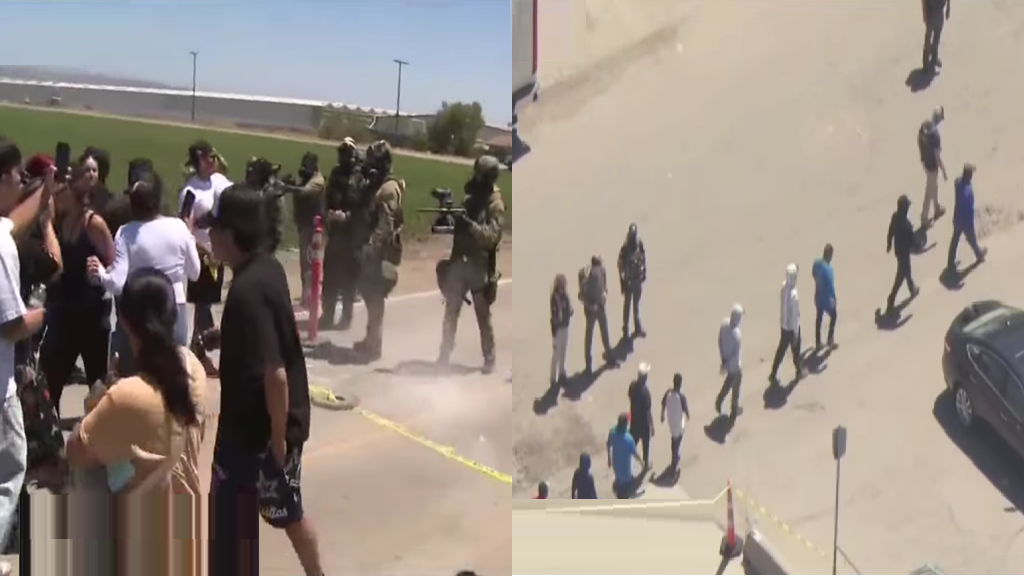
Decades after Japanese Americans were forcibly removed from their homes during World War II, survivors and advocates say the same legal and racial logic is resurfacing in Trump’s immigration enforcement. The renewed use of wartime authorities such as the Alien Enemies Act, the expansion of racial profiling by Immigration and Customs Enforcement and the opening of detention facilities at former incarceration sites have prompted comparisons to policies that once justified mass imprisonment.
Statements from senior immigration officials and White House advisers provide context for how those enforcement tactics became standard practice on the ground. Trump’s “Border czar” Tom Homan Tom Homan said ICE officers and Border Patrol don’t need probable cause to walk up to somebody, briefly detain them, and question them … based on their physical appearance,” criteria later cited by federal judges in rulings blocking unconstitutional profiling.
White House Deputy Chief of Staff Stephen Miller told ICE leaders in May 2025 to abandon target lists and “just go out on the streets” and arrest people “right away,” including at locations such as Home Depot and 7-Eleven. Court records showed arrests surged after that directive and later declined in jurisdictions where federal judges temporarily restricted profiling-based street stops.
Scholar situates enforcement in WWII history
In a recent Op-Ed published on The Conversation, Duke University professor Anna Storti compares today’s immigration enforcement within the history of World War II-era policies that treated Japanese Americans as inherent national security threats. She argues that contemporary reliance on racial profiling follows the same rationale that once allowed the suspension of civil rights based on ancestry.
“From 1942 to 1945, the U.S. government incarcerated approximately 120,000 Japanese Americans in internment camps,” Storti wrote. “To determine who was a national security threat, the government used overt racial profiling. Similar to today, when the U.S. government often misidentifies Latino Americans as noncitizens, a majority of the Japanese people incarcerated in WWII were U.S. citizens.”
Survivors see history repeating
In August 2025, the federal government opened an ICE detention center at Fort Bliss, a military installation previously used to imprison people of Japanese ancestry during World War II, heightening concern among community members who view the site as inseparable from that history.
Mary Murakami, who was imprisoned with her family at the Topaz camp in Utah as a teenager, said the similarities have been deeply unsettling. “Well, you could see why it’s an upsetting time because the same thing is happening to the immigrants now,” Murakami said in a September 2025 interview with NPR. “I never thought these thoughts would so vividly come back with another group of people in the United States.”
Japanese American activist George Takei, who was incarcerated as a child during World War II, warned in an interview with The Assignment that fear and misinformation can again be used to justify sweeping injustice. “Politicians lie and people believe that lie because there’s hysteria rampant at that time,” Takei said. “And in our time today, right now, people got swept up by a lie and elected him. And now people have regrets. People must speak out.”
Advocates urge to heed incarceration lessons
Storti argues that the tension between inclusion and exclusion has defined U.S. immigration policy for generations. While laws such as the War Brides Act of 1945 and the Immigration and Nationality Act of 1965 helped reshape the country into a more multiracial society, she contends that enforcement practices continue to sort communities by perceived worth.
“On the 80th anniversary of the War Brides Act, I’ve also noticed an alarming contradiction: Although America may be more multiracial than ever before, the U.S. immigration system remains as exclusive as it has ever been,” Storti wrote.
Over 60 Japanese American and Asian American organizations invoked that history in an amicus brief in mid-2025 urging federal courts to act as an independent constitutional check when the government relies on broad detention authority. “The courts must heed these lessons and demand the government come forward with convincing evidence, not just allegations, to support its invocation of this wartime power,” said Carl Takei, who leads the Asian Law Caucus’ community safety and civil liberties program.
This story is part of The Rebel Yellow Newsletter — a bold weekly newsletter from the creators of NextShark, reclaiming our stories and celebrating Asian American voices.
Subscribe free to join the movement. If you love what we’re building, consider becoming a paid member — your support helps us grow our team, investigate impactful stories, and uplift our community.

Join the conversation+