



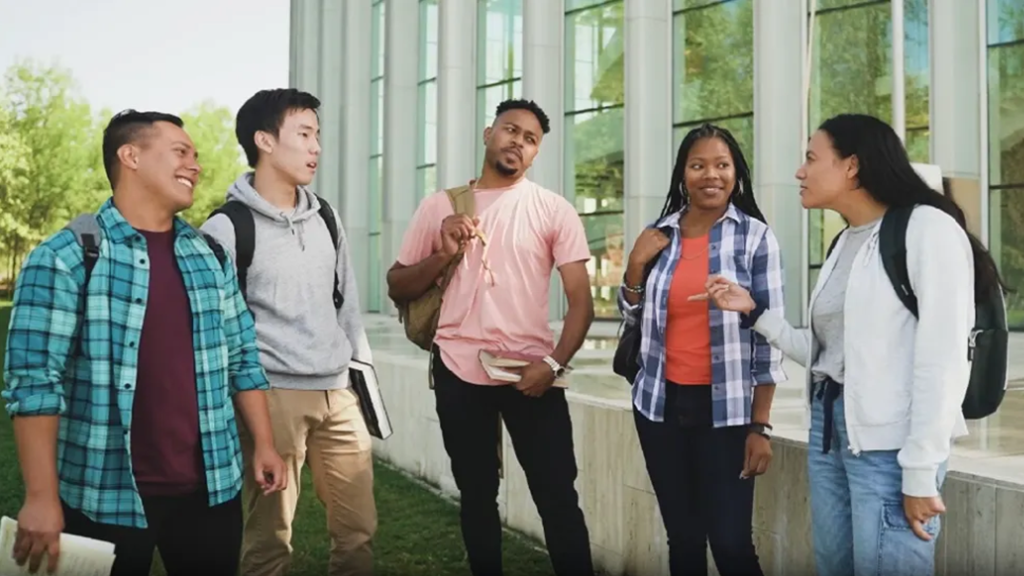
More prospective students from India and China are considering universities in Europe and Asia as the U.S. prepares to impose new limits on how long international students may remain without seeking an extension.
A Department of Homeland Security rule published July 17 replaces the longstanding “duration of status” system with fixed admission periods tied to a student’s academic program and generally capped at four years. Beginning Sept. 15, doctoral candidates whose authorized stay expires before they complete their degrees will need approval from U.S. Citizenship and Immigration Services to remain in the country.
A new timeline for study
For decades, international students studying on F-1 visas could remain in the U.S. for the duration of their academic programs provided they maintained lawful status. Schools could update a student’s expected completion date through the Student and Exchange Visitor Information System when additional time was needed to finish a degree.
Under the new rule, most students will be admitted for the length of their academic program or four years, whichever is shorter. Those who need more time must apply to USCIS for an extension with a newly issued Form I-20 from their school. Doctoral candidates are expected to feel the greatest impact because many Ph.D. programs take five to seven years to complete.
Students who apply before their authorized stay expires may continue studying while their requests are pending. If denied, they must leave the U.S. immediately. The rule also shortens the post-completion grace period from 60 days to 30.
The latest rule builds on a series of changes affecting international students. Visa interviews resumed earlier this year after a temporary pause, accompanied by expanded social media screening that requires many F, M and J visa applicants to make their online profiles publicly accessible during the review process.
Students weigh new options
The policy arrives as more Indian students broaden their search beyond American universities. More than 121,000 Indians are enrolled across the European Union, while education consultants have reported rising demand for Germany, France, Portugal and the Netherlands because of lower tuition, English-language graduate programs and post-study work opportunities.
Indian enrollment in the Netherlands reached about 3,700 in the 2025-26 academic year, up from 2,630 in 2018-19. Eindhoven University of Technology also recorded a sharp increase in pre-enrollments from India for the coming academic year, reflecting growing interest in European institutions.
Chinese students are also weighing alternatives as geopolitical tensions, costs and employment prospects reshape application decisions. Universities in Hong Kong and Britain have benefited from that shift, while some applicants have chosen to remain closer to home rather than navigate an increasingly uncertain U.S. immigration environment.
Recruitment pressures continue
India remained the largest source of international students in the U.S. during the 2024-25 academic year with 363,019 students, while China ranked second with 265,919 despite continued declines from its pre-pandemic peak. Together, the two countries accounted for more than half of all international students enrolled at American colleges and universities.
Those enrollment gains masked a slowdown in new arrivals. A New York Times analysis of federal data last year showed that international student entries from Asia fell 24% that August compared with the previous year. Arrivals from India dropped 44%, from 74,825 to 41,540, while entries from China fell 12%, from 98,867 to 86,647.
A fall 2025 survey of more than 825 U.S. institutions suggested those pressures have continued, with new international enrollment declining another 17% and graduate enrollment falling 12%. As universities compete more aggressively with institutions in Europe and Asia, the latest visa restrictions add another factor for prospective students weighing where to pursue their degrees.
This story is part of The Rebel Yellow Newsletter — a bold newsletter from the creators of NextShark, reclaiming our stories and celebrating Asian American voices.
Subscribe free to join the movement. If you love what we’re building, consider becoming a paid member — your support helps us grow our team, investigate impactful stories, and uplift our community.

Join the conversation+