



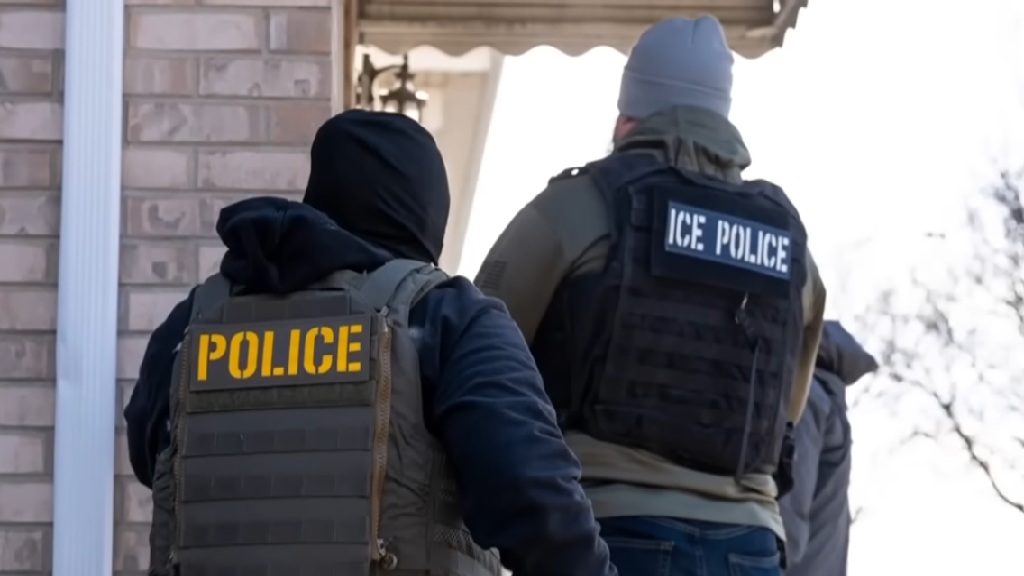
Federal courts in Alabama have charged undocumented immigrants with Failure to Register under the Alien Immigration Act, a Japanese American internment era law that has rarely been used in modern immigration enforcement. The Trump administration reinterpreted the statute and ordered renewed enforcement of federal registration requirements when President Donald Trump assumed office in January last year. Court records show at least 27 people were charged under the law in Alabama in 2025, often after being detained by Immigration and Customs Enforcement and transferred out of state.
A dormant law revived
Also known as the Alien Registration Act of 1940, the law requires noncitizens who remain in the U.S. for more than 30 days to register with the federal government and notify authorities of any change of address. Immigration attorneys say the requirement remained largely dormant for decades and was typically handled through administrative compliance rather than criminal prosecution.
Federal court filings show that enforcement in Alabama emerged through criminal case filings in the Northern and Middle districts rather than civil immigration proceedings. No Failure to Register cases were filed in Alabama’s Southern District, which covers the area where most immigration arrests occur, highlighting uneven application within the state. Advocates say they were not aware of Alabama previously pursuing criminal cases under the registration law.
How cases begin
Court documents show many of the Alabama cases originated with ICE agents issuing Central Violations Bureau citations. The CVB system is typically used for minor federal offenses such as violations on federal land, and the citations often carry fines of about $200 or less. Immigration attorneys said paying the fine constitutes an admission of guilt and results in a criminal record, effectively transforming civil immigration violations into criminal cases.
Court records also show many defendants were transferred from Alabama to immigration detention facilities in Louisiana, particularly in Jena, while their criminal cases remained pending in Alabama. In several instances, cases were terminated after defendants failed to appear for court hearings even though they were being held in federal custody elsewhere. A federal official said termination can indicate the case was closed or that the defendant was deported.
Legal pushback and historical echoes
Attorneys with the National Immigration Law Center said they have heard of similar prosecutions in Texas, Louisiana and Pennsylvania, though enforcement appears uneven. A national immigrant advocacy organization filed a lawsuit in March last year arguing that the revived registration requirement was implemented without adequate public input and has historically been enforced in discriminatory ways.
Neither the Department of Justice nor the U.S. attorney for Alabama’s Middle District explained the rationale for prosecuting the cases. “The U.S. Attorney’s Office is responsible for prosecuting all violations of federal law that occur within our district,” said Stacy Crane, a spokesperson for the Northern District of Alabama.
Japanese American survivors of World War II incarceration have drawn parallels between today’s immigration enforcement and the legal logic once used to justify their imprisonment. For those who lived through internment, the reappearance of those authorities has reopened memories of how quickly civil status can be turned into grounds for confinement.
This story is part of The Rebel Yellow Newsletter — a bold weekly newsletter from the creators of NextShark, reclaiming our stories and celebrating Asian American voices.
Subscribe free to join the movement. If you love what we’re building, consider becoming a paid member — your support helps us grow our team, investigate impactful stories, and uplift our community.

Join the conversation+