



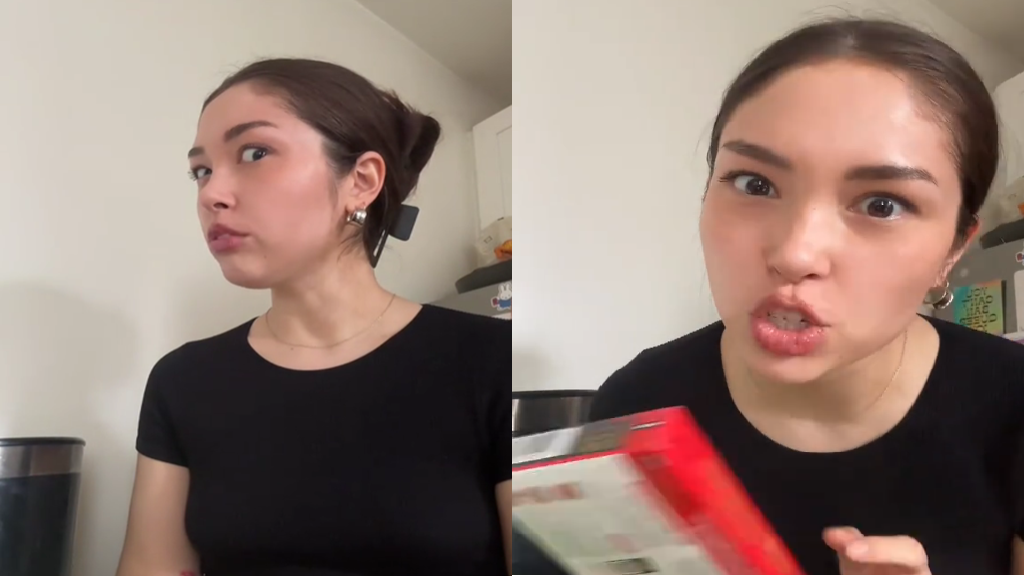
When TikTok creator Madeline posted a video about side-eyeing white shoppers at H Mart, she described it as a reflection on respect and lived experience. The clip instead triggered a rapid response cycle among larger creators, shifting the focus from grocery store behavior to broader questions about inclusion, intent and platform power.
Sharing a personal moment
Madeline, who posts as @say_qis, shared the video in September as a story about navigating Asian identity in a public space. She described exchanging looks with another shopper before realizing they were both mixed Asian and white, interpreting the moment as mutual defensiveness rather than hostility.
She closed by encouraging white shoppers to continue supporting Asian grocery stores while criticizing conduct she said disrupts everyday shopping. “White people, keep going to Asian grocery stores. Keep supporting small businesses,” Madeline said. “But I do hate it when white people come, and they’re like, ‘Oh my God, I’ve seen this on TikTok!’ And their kids are running around amok, making a disaster for people buying their weekly groceries.”
A response that shifted the debate
After being tagged by other TikTokers on Madeline’s post, food content creator Susie (@soogia1) responded, arguing that grocery stores are spaces for culinary discovery and that Madeline’s remarks discouraged curiosity.
“I think human beings have a general curiosity for food and experiencing foods that are new to them. And a lot of that is done at the supermarket,” Susie said. “So for you to not welcome people, not just not welcome them, but to actually deter them, I really don’t understand.”
Her response drew widespread attention and reframed the conversation around inclusion rather than the behavior Madeline described, prompting backlash against Madeline and Susie across platforms.
Pushback from other creators
Other creators pushed back on that framing, arguing that Madeline’s remarks were being taken out of context. TikTok creator Valion Joyce said he understood Madeline’s reaction through his own experiences as a Black man in the U.S. “You’re telling me that you hate these people so much that you want them out of the country, but you enjoy their culture and their food so much,” Joyce said, describing what he saw as a contradiction between racist rhetoric and cultural consumption.
Creator David Hanada said Asian grocery stores are open to everyone but argued that a side-eye was being treated as a demand for exclusion rather than a response shaped by experience. “If an Asian person is giving you a side-eye, know that it’s more of a warning to be respectful in their space,” Hanada said. He also warned that creators with large followings risk amplifying harm when nuance is lost.
Impact of call-out content
After days of escalating backlash, Susie posted multiple follow-up videos saying feedback from other Asian American creators forced her to reconsider how her framing may have invalidated Madeline’s experience and enabled harassment.
“It wasn’t just invalidating what Madeleine has gone through, but for me to have the audacity to tell somebody how they should feel about their own life in the space that they should feel comfortable in, I need to take a step back,” Susie said. She added that her response created space for others to attack Madeline, calling that outcome “unacceptable,” and said she was reassessing how she approaches call-out content.
UK-based creator Zee Zita Nji, known as The Reluctant Accountant, responded directly to how the situation was being framed by larger creators. Referencing Afro-Caribbean butchers in London, Nji said longtime patrons can immediately recognize who understands a space and who does not, based on how they move through it. She emphasized that reactions like Madeline’s are frequently mischaracterized as exclusion when they are instead reflections of familiarity and fluency inside cultural spaces.
This story is part of The Rebel Yellow Newsletter — a bold weekly newsletter from the creators of NextShark, reclaiming our stories and celebrating Asian American voices.
Subscribe free to join the movement. If you love what we’re building, consider becoming a paid member — your support helps us grow our team, investigate impactful stories, and uplift our community.

Join the conversation+