



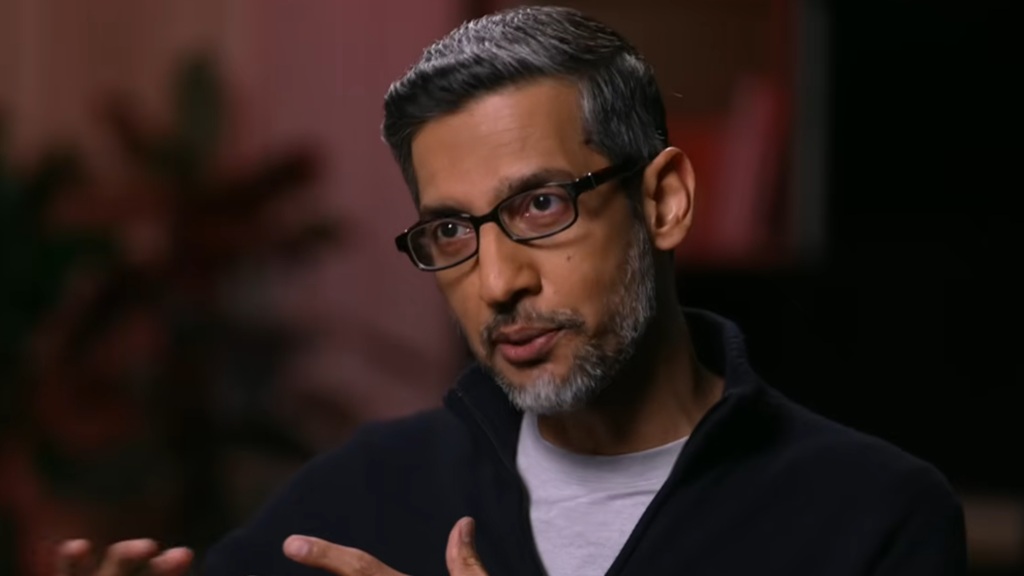
Google CEO Sundar Pichai was smiling in a BBC interview aired last Tuesday when he suggested that “what a CEO does is maybe one of the easier things maybe for an AI to do one day.” While framed as a fascinating prediction about the future of automation, the casual delivery lands differently for workers across the globe who are bracing for a future of economic uncertainty.
For the executive class, the rise of autonomous agents is an intellectual curiosity to be debated on television. For the workforce, it is an immediate survival crisis that makes Pichai’s nonchalance feel strikingly disconnected from reality.
The Economics of “Easy”
Pichai’s confidence stems from a corporate strategy that is aggressively prioritizing silicon over talent. While he muses about the theoretical replacement of his own role, his company is actively dismantling others to fund the very technology he describes. In 2025 alone, Alphabet is projected to spend between $91 billion and $93 billion on capital expenditures, primarily to build out the AI infrastructure required for these new systems. This massive reallocation of resources has a human cost. In October alone, Google cut over 100 design and user experience roles in its cloud division to fuel this pivot, proving that for regular employees, the trade-off between AI investment and job security is not hypothetical.
The disconnect lies in the disparity of consequences. When Pichai describes CEO-level automation as a “logical endpoint” of AI evolution, he does so from a position of absolute safety. With an estimated net worth of $1.5 billion and a 2024 compensation package exceeding $10 million, he is insulated from the “efficiency” measures his company imposes on others. His suggestion that management is “easy” for an AI to replicate ignores the fact that he is the one pulling the levers of this transition. He can afford to view his own potential obsolescence as a philosophical experiment because he has already secured a fortune that ensures he will never actually have to compete with the machines he is building.
Executive optimism vs. worker reality
This insulation explains why Pichai’s advice to the workforce rings so hollow. “I would encourage the next generation to embrace the technology,” he urged in the same interview, adding that “people who learn to adopt and adapt will do better.” He asserts that AI has “potential for extraordinary benefits” and that society must simply “work through” the resulting disruptions. Yet the data suggests these disruptions are far more severe than mere growing pains. The World Economic Forum’s Future of Jobs Report 2025 found that 40% of employers expect to reduce their workforce in areas where AI can automate tasks, projecting a net loss of 2 million jobs globally by 2029.
Pichai’s optimism parallels remarks by OpenAI CEO Sam Altman, who recently claimed he would be “nothing but enthusiastic” if AI performed better than he could. Despite such humble posturing, the structural reality of corporate governance means these men are likely the last people who will ever actually be displaced. Corporate boards require a human face for legal liability and crisis leadership, ensuring that while executives push for workers to “adapt” to their own elimination, the leaders themselves remain secure.
Pichai’s smile during the interview betrays a fundamental truth: he is predicting a future he will likely never have to endure, leaving the risks entirely on the shoulders of those who do not have a 10-figure safety net.
This story is part of The Rebel Yellow Newsletter — a bold weekly newsletter from the creators of NextShark, reclaiming our stories and celebrating Asian American voices.
Subscribe free to join the movement. If you love what we’re building, consider becoming a paid member — your support helps us grow our team, investigate impactful stories, and uplift our community.

Join the conversation+