



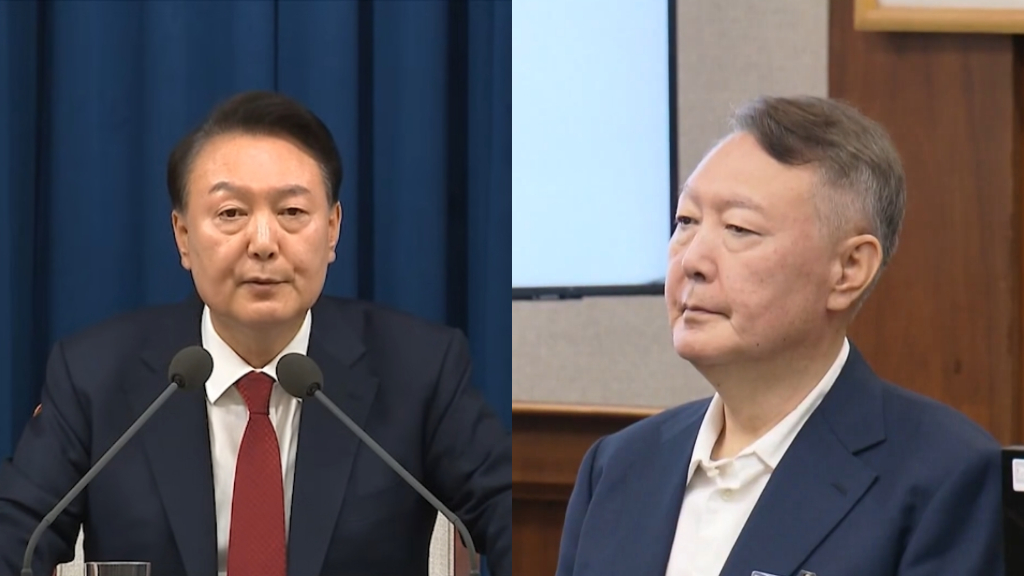
Former President Yoon Suk Yeol was sentenced to five years in prison last week, the first of eight criminal verdicts stemming from his 2024 martial law crisis.
Catch up: Yoon abruptly declared martial law on Dec. 3, 2024, sending troops to surround the National Assembly before lawmakers forced their way inside and unanimously voted down his decree within hours. On Friday, the Seoul Central District Court convicted him on multiple charges, including blocking his arrest, creating false official records and failing to convene a full Cabinet meeting before declaring martial law.
Judge Baek Dae-hyun said severe consequences were warranted because Yoon showed no remorse and continued making “hard-to-comprehend excuses.” The ruling found that he transformed the Presidential Security Service into what amounted to a “private army” to obstruct investigators carrying a valid warrant in January 2025. His eventual arrest required over 3,000 police officers and marked the first time a sitting South Korean president had ever been detained.
Why this matters: Yoon’s verdict demonstrates South Korea’s judiciary enforcing strict limits on presidential authority and establishes critical legal boundaries around executive power during political crises. He still faces far graver charges in a separate rebellion trial where prosecutors are seeking the death penalty, with sentencing scheduled next month. An execution, however, remains unlikely given South Korea’s moratorium since 1997. Clemency was also recorded in history when dictator Chun Doo-hwan, who received the death sentence for his 1979 coup and 1980 massacre of 200 pro-democracy protesters, was pardoned after two years.
Legal observers believe Yoon’s defiant stance aims to maintain supporter loyalty while positioning himself for a future presidential pardon framed as national reconciliation. His lawyers immediately appealed his verdict, calling it “politicized.”
What this means for Asian Americans: At the time, then-Senator-elect Andy Kim (D-N.J.) captured the surreal nature of the crisis, saying he “never would have imagined” seeing South Korean democracy descend into martial law. For Korean Americans observing Seoul’s justice system hold a former president accountable while watching the Trump administration suspend immigrant visa processing for 75 countries this month, deploy National Guard troops to cities and push to control independent federal agencies, the divergence reveals starkly different institutional responses to executive overreach. Ultimately, the trials shape global perceptions of South Korea as one of the world’s most resilient democracies.
Seven more trials await Yoon, with his rebellion case which carries potential capital punishment set for sentencing on Feb. 19.
This story is part of The Rebel Yellow Newsletter — a bold weekly newsletter from the creators of NextShark, reclaiming our stories and celebrating Asian American voices.
Subscribe free to join the movement. If you love what we’re building, consider becoming a paid member — your support helps us grow our team, investigate impactful stories, and uplift our community.

Join the conversation+