



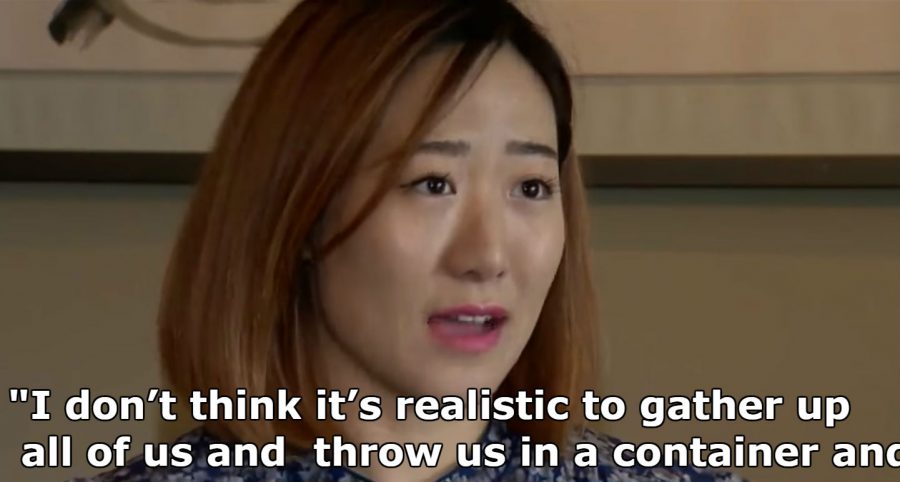
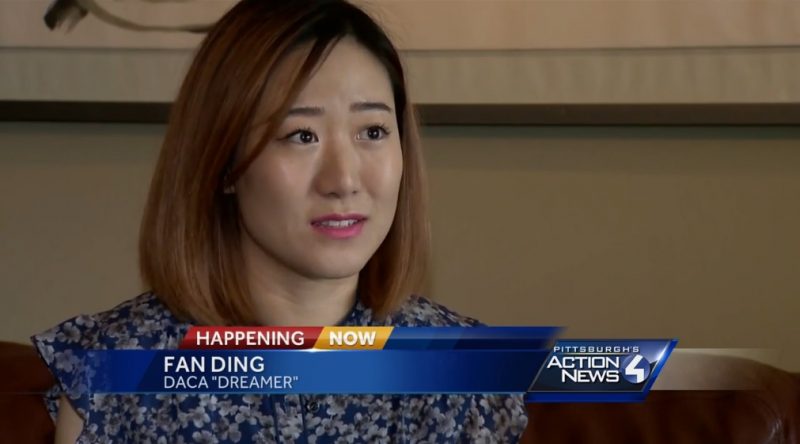
A Chinese woman who was brought to the U.S. at age 12 to cure of a rare disorder is now afraid she must leave after the Deferred Action for Childhood Arrivals (DACA) expires in six months.
Fan Ding, a native of Beijing, moved with her father to Pittsburgh, Pennsylvania, in 1996.
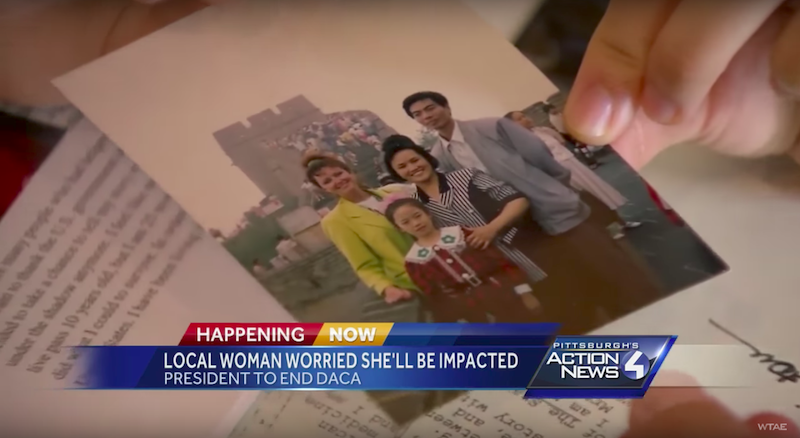
Unfortunately, she was born with a genetic disorder called Gaucher disease, in which fatty substances accumulate in the liver, spleen, bone marrow and nervous system, interfering with their functions.
“I was having complications. I had a bone infection. I was literally dying. So the only way for my parents to save me was to try to contact the UPMC doctor here,” Ding told WTAE-TV Pittsburgh.
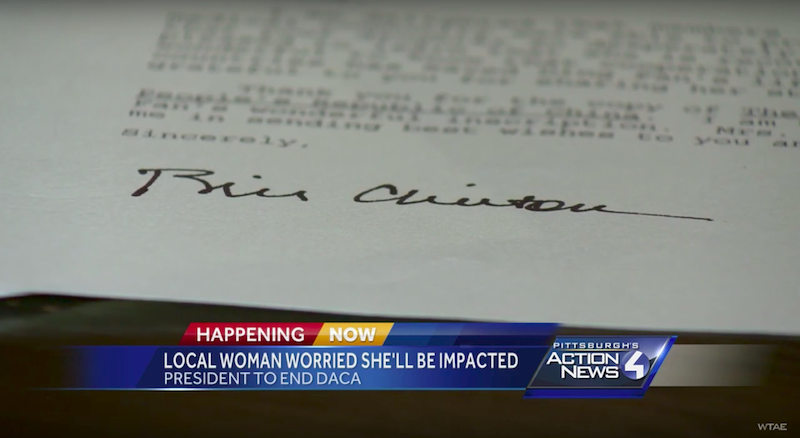
Ding’s story eventually made headlines and was heard by former President Bill Clinton, who sent her a letter of support, and a UPMC doctor, who sent her an invitation for treatment.
With these letters, Ding and her father secured B-2 visitor visas from the embassy, and it did not take long for Ding to start receiving treatment.
All seemed to be going well until Ding turned 16, when immigration officials denied her application to renew her B-2 visa.
Also known as tourist visas, B-2 visas are non-immigrant visas meant for persons entering the U.S. for leisure or medical treatment. Holders are not permitted to study for credit or work during their stay.
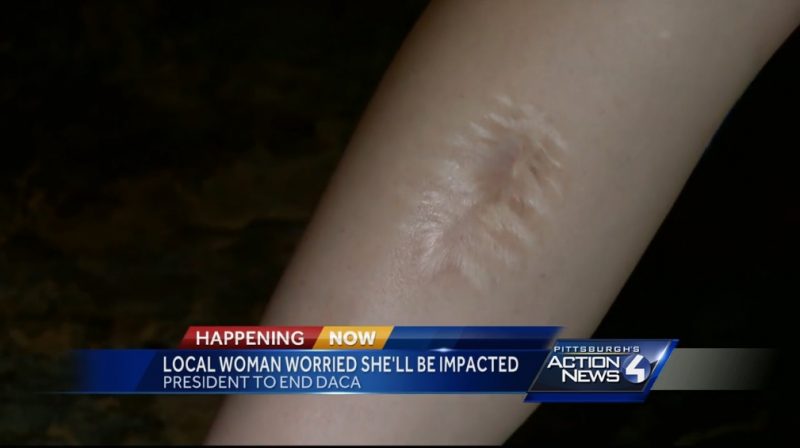
The rejection of Ding’s application for renewal led to her living as undocumented for years. Despite this — and her medical condition — she was able to graduate from Schenley High School in 2003 and Penn State University in 2006. She earned an MBA from Duquesne University in 2014.
It was in 2012 when Ding found hope as then-President Barack Obama authorized DACA, which allowed 787,580 undocumented immigrants — described as “Dreamers” — to obtain driver’s licenses, enroll in colleges and legally secure jobs.
Dreamers were brought to the U.S. as children. To qualify for DACA, they must have arrived before the age of 16 and have lived in the country since June 15, 2007, CNN noted. In addition, they must not be older than 30 when the program was enacted in 2012.
Ding, who applied on the first day the program started taking applicants, was successful. Soon, she was able to get her driver’s license and work in the pharmaceutical industry.
Her status, however, is again in limbo after the Trump administration announced on Tuesday that the program would be ending in six months.
On Thursday morning, President Donald Trump reassured Dreamers in a tweet:
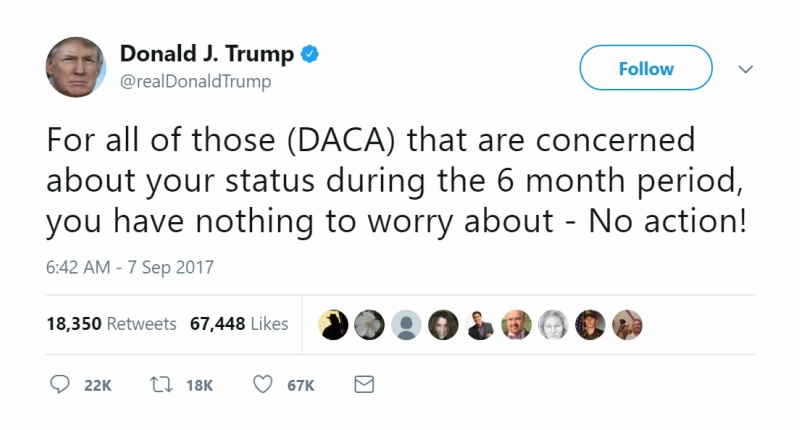
The October 5 deadline, however, will be cutting it close. According to Vox, this is a month or two before people have been applying for renewals. And just recently, the government also warned against applying too early.
Ding worries for her future but remains hopeful.
“At this point, I don’t think I’m one of the priorities they should be looking to deport,” she told WTAE, adding that Congress could actually pass a law — as Trump urges.
Nevertheless, Ding understands the sentiment in law:
“I can see people saying that ‘We can’t just give citizenship to all the illegals here.’ I’m not asking to be a citizen overnight, but this is an issue that has to be dealt with. I don’t think it’s realistic to gather up all of us and throw us in a container and through us overseas.”

Join the conversation+