



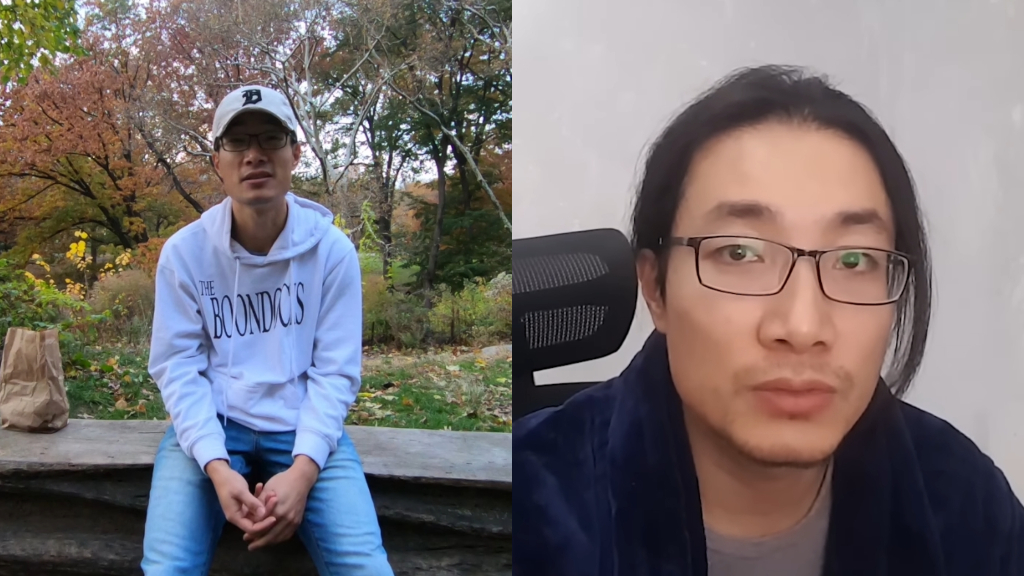
A Chinese national who filmed detention facilities in Xinjiang at great personal risk now faces removal from the U.S., drawing widespread calls for his protection from members of Congress, human rights organizations and the Pulitzer Prize-winning journalists his evidence helped support.
About Guan and his efforts: Immigration officials detained Heng Guan, 38, in August during a raid on his upstate New York residence that initially targeted his roommate. His documentation work began in October 2020, when he drove across Xinjiang filming sites a BuzzFeed report had identified through satellite analysis as likely detention centers. With a telephoto camera, he captured facilities featuring guard towers, high walls and barbed wire, including one displaying the slogan “reform through labor, reform through culture.”
After a three-day expedition, Guan fled China in 2021 via Ecuador, then made a 23-hour solo voyage in an inflatable boat from the Bahamas to Florida. His 19-minute video, which was released in October 2021, provided rare ground-level confirmation of what satellite imagery had revealed about China’s mass detention system.
What this means: Guan’s case highlights the irony that someone whose evidence informed U.S. sanctions policy now faces expulsion under President Donald Trump’s immigration crackdown. In one of its final acts, the first Trump administration even determined that China committed genocide against Uyghurs and other minorities in Xinjiang. Beijing’s transnational repression also appears to be coordinated, with a 2022 study documenting over 7,000 Chinese intimidation, detention and deportation actions against Uyghurs across 44 nations since 1997.
At a hearing Monday, government attorneys proposed sending him to Uganda instead of China. But this raises concerns given Beijing’s close economic and defense ties with that country, attorney Chuangchuang Chen told The New York Times. Zhou Fengsuo, executive director of Human Rights in China, also warned that if Guan is deported, he will “certainly face a very severe prison sentence.” For Asian American communities, this shows how Trump’s enforcement measures can endanger refugees from authoritarian regimes, even when their actions advance U.S. human rights priorities.
What’s next: Judge Charles Ouslander scheduled a Jan. 12 hearing following Monday’s proceedings, citing substantial public interest. Chen will file motions for Guan to remain and continue with the asylum application he filed in October 2021.Congressional support has also come from Rep. Raja Krishnamoorthi, who wrote that the U.S. “should not be complicit in the detention, torture, or worse of individuals who bravely documented the human rights abuses of the Chinese Communist Party.”
Guan is being held at Broome County jail in New York. Back in China, state security officers have reportedly interrogated his relatives since January 2022, ordering them to report any contact. From detention, Guan told Human Rights in China he has no regrets: “Because I am now personally experiencing the taste of losing my freedom, I can better understand the feelings of those in concentration camps.” Meanwhile, his mother Luo Yun, who has lived in Taiwan for nearly 20 years, told AFP, “If he has a chance to remain in the United States, he’ll at least be safe.”
This story is part of The Rebel Yellow Newsletter — a bold weekly newsletter from the creators of NextShark, reclaiming our stories and celebrating Asian American voices.
Subscribe free to join the movement. If you love what we’re building, consider becoming a paid member — your support helps us grow our team, investigate impactful stories, and uplift our community.

Join the conversation+