



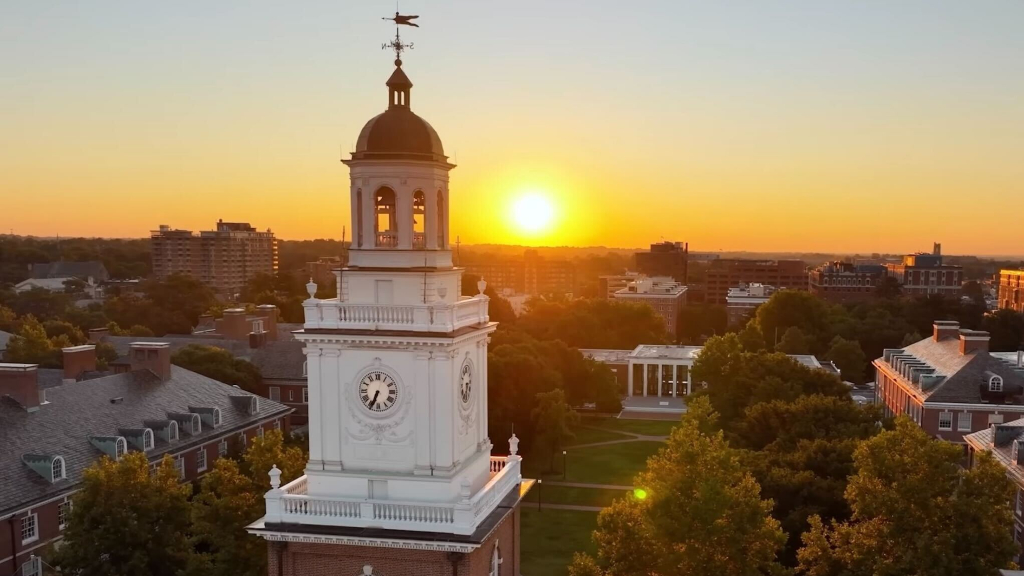
The share of Asian American students in Johns Hopkins University’s incoming class has surged by nearly 20 percentage points in two years, accelerating a national debate over who benefits and who loses when elite universities move away from race-conscious admissions.
A campus transformed
Since the Supreme Court’s 2023 ruling in Students for Fair Admissions v. Harvard that stripped colleges of the ability to weigh race as an admissions factor, Johns Hopkins has reported a sharp demographic shift. Asian students made up 45.1% of the university’s fall 2025 freshman class, up from 25.6% in 2023. Over the same period, Black first-year enrollment fell from 9.8% to 4%, Hispanic enrollment dropped from 20.8% to 10.1% and white freshman enrollment held relatively flat, moving from 19.3% to 21%.
Despite the scale of the change, the university has not publicly addressed the magnitude of the shift. One spokesperson said Hopkins follows federal law and considers neither race nor ethnicity when evaluating applicants. The university also reinstated a standardized test requirement after the pandemic, a move the Department of Education applauded in March, citing the university’s “substantial shifts” in first-year demographics.
What this means
The Hopkins numbers land in the middle of a broader, unresolved argument within Asian American communities. As we have previously reported, polling shows roughly three in four Asian Americans support affirmative action, even as litigation challenging race-conscious policies has been driven by a smaller subset and amplified by conservative networks. The Hopkins surge appears to support claims that race-conscious admissions suppressed Asian enrollment, but critics have argued the litigation exploits Asian Americans to dismantle broader minority protections.
On campus, student voices illustrate the divide. “The underclassmen are really not as diverse anymore,” Noah Martinez, a Filipino American junior from Seattle, told the Baltimore Banner. “It feels like everyone is Asian now.” Bryan Cook, higher education policy director at the nonpartisan Urban Institute, told the Baltimore Sun that the ruling’s impact fell disproportionately on private, selective universities, leaving community colleges and state schools that rely heavily on test scores largely unchanged.
The big picture
The Hopkins shift is unfolding alongside a broader legal offensive testing how far the Supreme Court’s affirmative action ban extends. In February, we reported that the Department of Justice moved to join a lawsuit accusing UCLA’s medical school of using race as a factor in admissions. A separate report last July found similar patterns across 23 public medical schools, suggesting that what happened at Hopkins may reflect a much wider reckoning in selective higher education.
For many Asian American advocates, the convergence of undergraduate and graduate data validates longstanding grievances that race-conscious admissions suppressed Asian representation despite strong credentials. But the picture is complicated by early post-ban data showing Asian enrollment actually declined at Duke, Princeton and Yale, indicating that the ruling’s effects remain uneven and far from settled.
This story is part of The Rebel Yellow Newsletter — a bold newsletter from the creators of NextShark, reclaiming our stories and celebrating Asian American voices.
Subscribe free to join the movement. If you love what we’re building, consider becoming a paid member — your support helps us grow our team, investigate impactful stories, and uplift our community.

Join the conversation+