



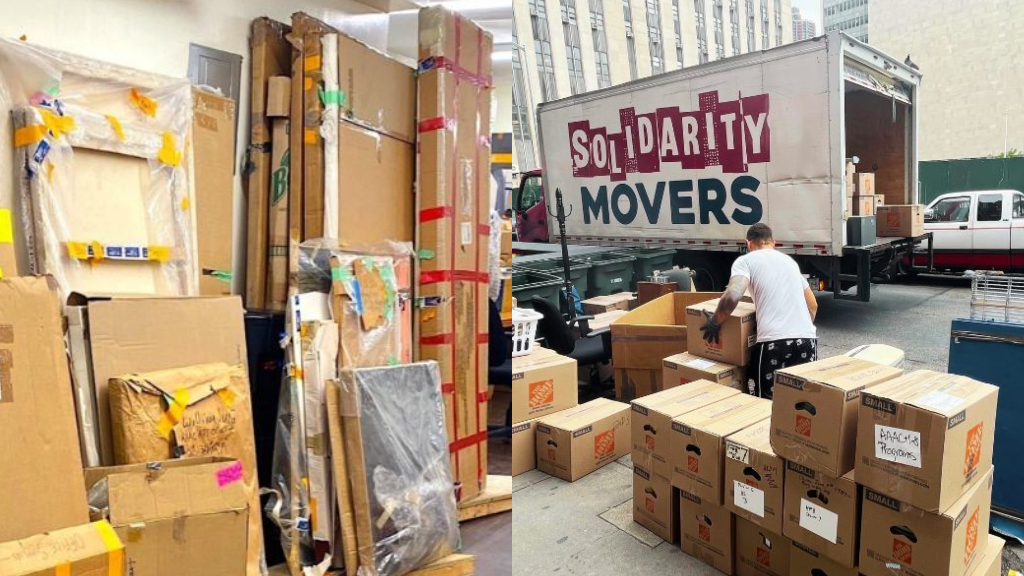
Frozen sprinkler pipes burst in a building that houses the Asian American Arts Centre (AAAC) collection in Flushing, Queens, last month, flooding the space and putting hundreds of artworks and archival materials at risk.
What happened: Water from the Feb. 9 burst damaged the space where Think!Chinatown oversees the collection, which includes roughly 400 artworks and 1,800 artist files documenting work by 150 artists. Robert Lee, AAAC’s founder and retiring executive director, said the team spent 72 hours “salvaging the artworks, artists archive, files and resources.” Staff and volunteers have worked for weeks on stabilization work, but the group warns time is running short to save the materials. The building is owned by Asian Americans for Equality.
Why this matters: The organization traces its roots to 1974 when Lee and Eleanor Yung established the Asian American Dance Theatre, which became AAAC in 1987. Over five decades, the collection has documented Asian American artistic work and cultural exchange through exhibitions, workshops and community programs. The “Stories of Chinatown” initiative, for instance, paired immigrant middle schoolers with neighborhood seniors to develop art projects together. The flooding now threatens this legacy at a critical moment, as AAAC was preparing to expand with a $1.3 million city grant to Asian Americans for Equality to create a research center and community hub.
What your help will do: Organizers warn that delays will cause irreversible damage. AAAC seeks $65,000 in donations, and as of this writing, the group has raised $17,096. The funds will cover urgent conservation work and assessment, treatment of water-damaged artworks, protection measures for archival materials, temporary housing costs and specialized transport to keep the collection accessible to future generations. “This is not only recovery from a disaster. It is the preservation of cultural memory for the diversity of our city and for Asian American communities wherever they may be,” AAAC said in a fundraiser.
This story is part of The Rebel Yellow Newsletter — a bold weekly newsletter from the creators of NextShark, reclaiming our stories and celebrating Asian American voices.
Subscribe free to join the movement. If you love what we’re building, consider becoming a paid member — your support helps us grow our team, investigate impactful stories, and uplift our community.

Join the conversation+