



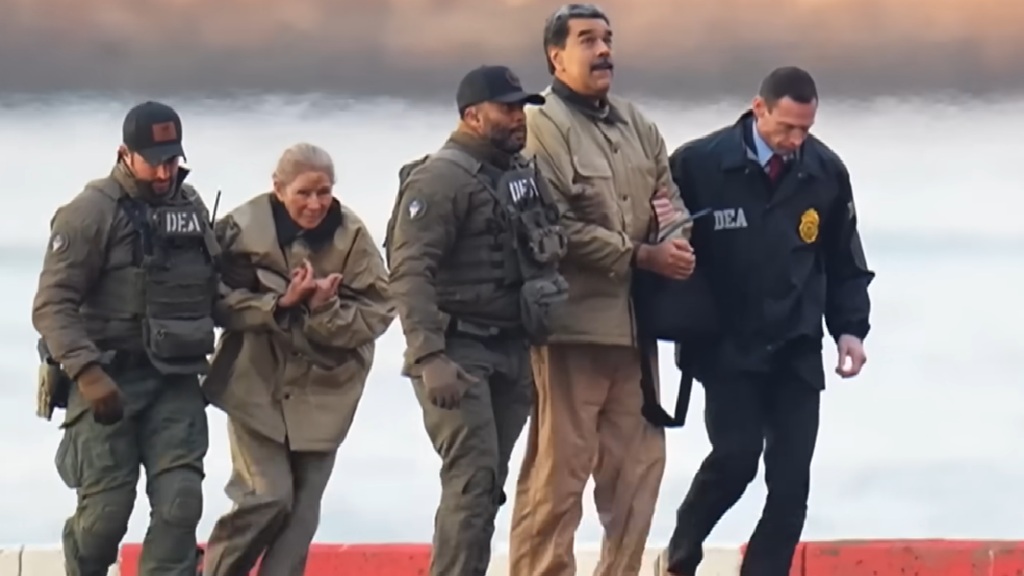
The Trump administration’s Jan. 3 operation to seize Venezuelan President Nicolás Maduro triggered swift reactions across Asia, where governments warned the move could weaken international law and alter how power is exercised beyond the Western Hemisphere. Leaders including Malaysian Prime Minister Anwar Ibrahim publicly criticized the operation, while analysts are assessing whether the raid shifts deterrence calculations or lowers the threshold for similar leadership-targeting tactics in the China-Taiwan context.
Sovereignty concerns across Asia
On X, Anwar said the operation constituted a violation of international law and warned it weakened protections that smaller states depend on to deter coercion by major powers. Malaysia’s government said it was closely monitoring developments for broader implications on sovereignty and global stability, reflecting concerns shared by several governments in the region.
Indonesia echoed those concerns, with its Foreign Ministry urging restraint and stressing the importance of the United Nations Charter. Thailand and Vietnam also called for peaceful resolution and respect for sovereignty. Meanwhile, the Philippines and Singapore emphasized adherence to international law without directly condemning the operation.
Beijing’s diplomatic pushback
In China, Foreign Minister Wang Yi rejected the idea that any country could act as “the world’s judge” and called for respect for national sovereignty. Beijing demanded the immediate release of Maduro and framed the US operation as a destabilizing act that undermines global order.
During a meeting with visiting Irish Prime Minister Leo Varadkar on Monday, Chinese President Xi Jinping made a pointed but indirect reference to the U.S. Xi condemned what he described as “unilateral bullying” that “seriously undermines the international order,” adding that “all countries should respect other peoples’ independent choice of development paths and abide by international law and the purposes and principles of the United Nations Charter, with major powers in particular setting the example.”
Chinese officials and commentators have since used the incident to amplify claims of US inconsistency in diplomatic forums and to push back against criticism of Beijing’s actions in the Taiwan Strait and South China Sea. Analysts say Maduro’s capture gives Beijing rhetorical leverage even as China continues to deny parallels between Venezuela and its claims over Taiwan.
Taiwan security debate intensifies
Taiwanese officials have moved to dampen speculation that the US operation against Venezuela signals a new template for action against the island. Wang Ting-yu, a lawmaker from the ruling Democratic Progressive Party who sits on the legislature’s foreign affairs and defense committee, rejected the idea that Beijing could replicate Washington’s actions. “China is not the US, and Taiwan is not Venezuela. Comparisons that China can carry out the same thing in Taiwan is wrong and inappropriate,” Wang said, adding that “China has never been short of hostility towards Taiwan militarily; what it lacks is feasible means.”
Wang’s remarks reflect the position of Taiwan’s government, which has sought to contain public anxiety while stressing continuity in defense planning rather than signaling any shift in strategy. Officials argue that while China maintains persistent military pressure, including air and naval activity around the island, it still faces significant operational and political barriers to executing a leadership-targeting strike.
Analysts note, however, that the US raid has sharpened debate over escalation risks and crisis stability. Some warn the operation could normalize discussion of so-called decapitation strikes, pointing to long-standing drills by the People’s Liberation Army that simulate attacks on command structures in a Taiwan contingency, even as others say the episode primarily underscores US capability rather than intent.
This story is part of The Rebel Yellow Newsletter — a bold weekly newsletter from the creators of NextShark, reclaiming our stories and celebrating Asian American voices.
Subscribe free to join the movement. If you love what we’re building, consider becoming a paid member — your support helps us grow our team, investigate impactful stories, and uplift our community.

Join the conversation+