



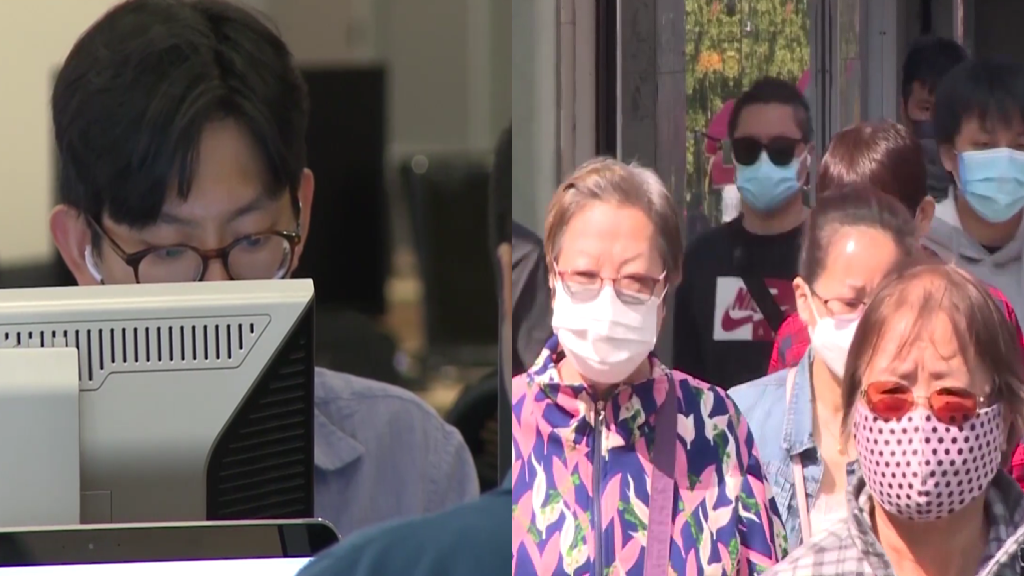
Rising costs, health care and immigration top the list of issues Asian American, Native Hawaiian and Pacific Islander adults want the government to address in 2026, according to a recent survey by AAPI Data and The Associated Press-NORC Center for Public Affairs Research. Nearly half of the 1,029 respondents cited inflation or the cost of living as a top concern, while just 10% said they are confident the federal government will make progress on major issues. The findings highlight deep economic anxiety paired with widespread skepticism toward the Trump administration.
Cost pressures dominate agenda
About 72% of the respondents cite at least one economic issue they want the government to address and 42% mention concerns related to personal finances. Inflation or the cost of living stands out as the most frequently cited issue at 49%, up sharply from 37% in 2024 and higher than among adults overall.
While inflation has eased from its peak, economists project it will remain above the Federal Reserve’s 2% target into 2026, with prices for essentials such as food, housing and health care continuing to rise and keeping pressure on household budgets, according to economic forecasts.
Expectations for personal finances, however, are more mixed. While 58% of AAPI adults expect the national economy to worsen in the coming year, fewer, 35%, say their own financial situation will decline. About 45% expect their finances to remain about the same, and 19% anticipate improvement. Lower-income households are significantly more likely to expect financial deterioration than those earning $100,000 or more, who are more likely to anticipate stability.
Health care and borders
Health care has grown more prominent as a concern across AAPI communities. About 44% cite a health care issue as one of the top problems the government should address in 2026, up from 32% last year. Concerns center largely on affordability, with 60% saying they are extremely or very concerned about rising health care costs.
Access remains a key worry as well, with roughly four in 10 AAPI adults say they are concerned about being unable to access health care when needed, pay for treatment or maintain health insurance. These concerns, which are especially pronounced among lower-income respondents, come amid broader resistance within AAPI communities to reductions in coverage, with surveys consistently showing opposition to cuts that would affect affordability and access.
Immigration also remains a top-tier issue, cited by 41% of AAPI adults. Views on immigration are sharply divided along partisan lines, with AAPI Republicans far more likely than AAPI Democrats to list it as a top priority.
Low trust in government
Confidence in the federal government’s ability to address major problems remains deeply eroded. Seven in 10 AAPI adults say they are not confident or only slightly confident the government will make progress in 2026, up from six in 10 a year earlier. Although AAPI Republicans report higher confidence levels than independents and Democrats, skepticism remains widespread across political affiliations.
While only a small share of respondents list democracy itself as a top issue, concerns about democratic functioning are pronounced. More than half say the U.S. is a poorly functioning democracy, and majorities believe freedom of speech and freedom of the press face major threats. Nearly half expect their personal rights and freedoms to worsen in the coming year.
The findings align with broader surveys showing Americans remain divided about their personal finances and outlook, with just 10% of U.S. adults describing 2025 as a “great” year and many citing economic stress, health concerns and dissatisfaction with work as they look toward 2026.
Giving despite economic strain
Even amid economic pressure and political skepticism, charitable giving remains widespread within AAPI communities. About 84% report donating money to a charitable organization in the past year, and 76% say they donated food, clothing or household items.
AAPI adults are more likely than the general public to donate through crowdfunding campaigns and to support disaster relief and educational institutions. Belief in a charity’s effectiveness and mission are the most commonly cited reasons for giving, and nearly three-quarters say it is very or extremely important to help friends or family members in need, underscoring the continued role of mutual aid within AAPI communities.
This story is part of The Rebel Yellow Newsletter — a bold weekly newsletter from the creators of NextShark, reclaiming our stories and celebrating Asian American voices.
Subscribe free to join the movement. If you love what we’re building, consider becoming a paid member — your support helps us grow our team, investigate impactful stories, and uplift our community.

Join the conversation+