
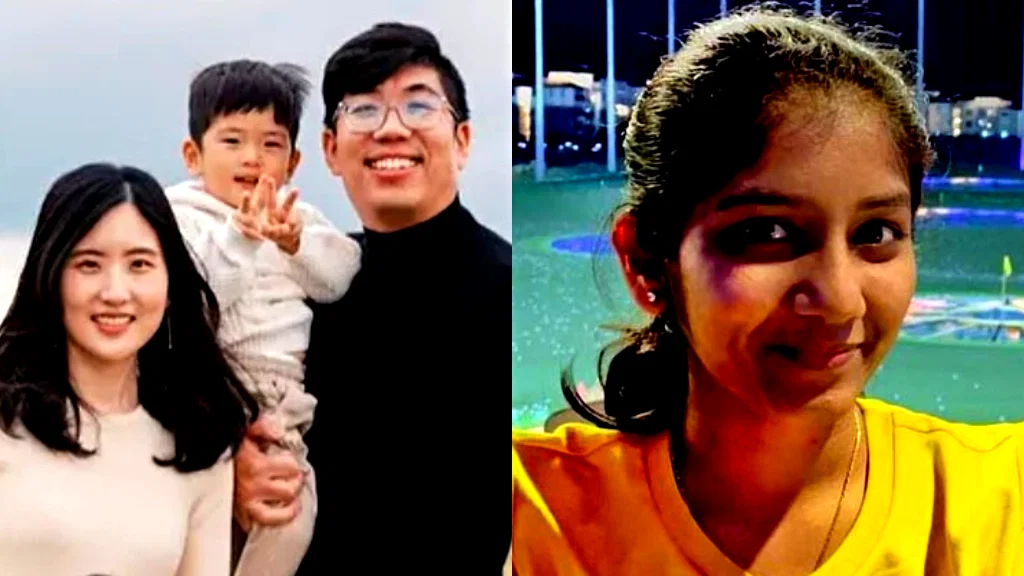
Three years after a gunman killed eight people at Allen Premium Outlets in Allen, Texas, community members are still reeling while victim families pursue a civil lawsuit now before the Texas Supreme Court.
Lives lost, lives changed
Eight — four of them Asian — were killed and seven more were injured when Mauricio Garcia, 33, opened fire at the shopping center before being fatally shot by a police officer on May 6, 2023. Rebecca Gentry, who was walking into a store as shots were fired, said the experience has affected her since. “I come every year here to memorialize the victims and the families and take back some sort of strength because it’s bled into a lot of different parts of my life,” she told CBS Texas.
Among the dead were Kyu Song Cho, 37, Cindy Shinyoung Cho, 35, and their 3-year-old son James. The Korean American family was at the mall to exchange clothes for their 6-year-old son William, who is now the only member of the family to survive. Also killed were Aishwarya Thatikonda, 26, security guard Christian LaCour, 20, Elio Cumana Rivas, 32, and sisters Daniela Mendoza, 11, and Sofia Mendoza, 8.
Legal challenge
The victims’ families, including survivors of the shooting, filed a civil suit in 2024 against mall owner Simon Property Group, security contractor Allied Universal Security Services and Budget Suites of America, the business operating a motel where Garcia had been living, alleging that the property lacked adequate safeguards.
After a Dallas County judge declined to dismiss the case and an appeals court upheld that decision, the Texas Supreme Court agreed in March to hear oral arguments, scheduled for Sept. 16. Simon Property Group, for its part, has denied responsibility, arguing that mall owners bear no legal duty to prevent shootings absent a prior incident on their property.
Why this matters
The shooting’s toll has fallen disproportionately on the Asian American community. Garcia’s posts on Russian platform OK.ru revealed deep anti-Asian sentiment targeting East Asians and South Asians, as well as praise for the “White Race.” The case has drawn attention from advocates who see it as a test of whether public venues can be held accountable for racially motivated violence, as anti-Asian hate crimes persist.
This story is part of The Rebel Yellow Newsletter — a bold newsletter from the creators of NextShark, reclaiming our stories and celebrating Asian American voices.
Subscribe free to join the movement. If you love what we’re building, consider becoming a paid member — your support helps us grow our team, investigate impactful stories, and uplift our community.