


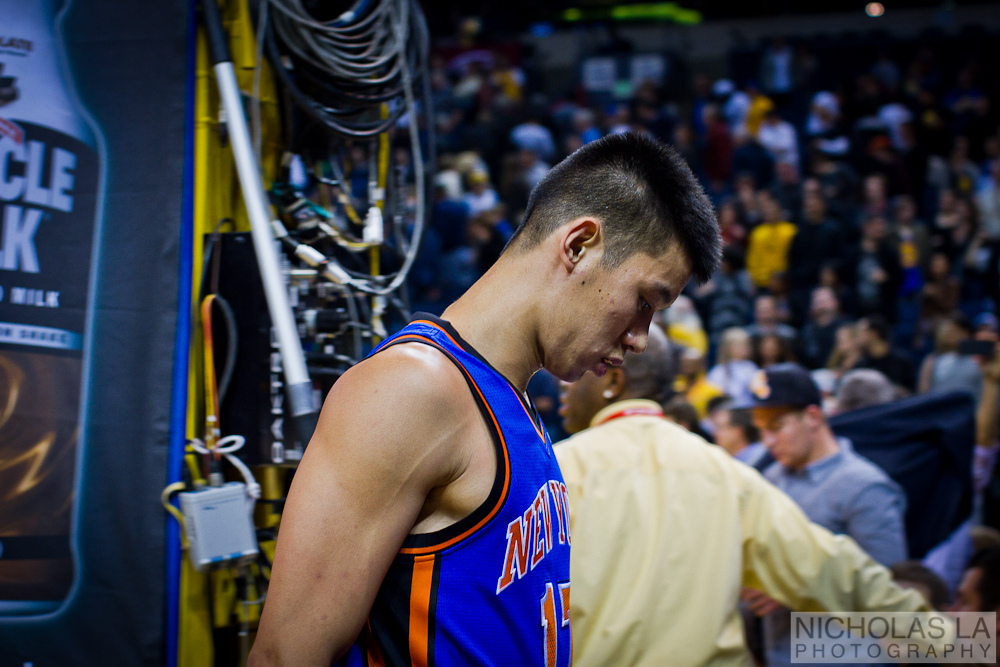
The fast read. The strongest case is not one giant dollar claim. It is several signals moving at once: cheap salary, strong on-court production, a stock pop, and sudden audience demand.Spotrac
Jeremy Lin was a basketball story. He may have been a missed business bet.
Published May 11, 2026·Updated May 12, 2026·9 sources
Lin was not just a feel-good story. The demand around him was measurable.
- Lin was not just a feel-good story.
- Jeremy Lin's retirement closes one of the NBA's strangest careers: a breakout that looked sudden, proved real, and still feels underpriced in hindsight.
- The missed bet was not guaranteed riches.
- Jeremy Lin created measurable demand.
- Lin was a low-cost breakout.
Lin was a low-cost breakout. Spotrac lists his 2011-12 Knicks cash salary at $762,195.Spotrac
It was not empty hype. In 35 games with New York in 2011-12, Lin averaged 14.6 points and 6.2 assists.Basketball-Reference
The public-market pop was real. CNNMoney reported that Madison Square Garden Co. stock jumped 13% after Lin's Feb. 4, 2012 breakout game against the Nets.CNNMoney
A later Forbes/TheStreet piece tied roughly $170 million in added market value to the frenzy, but the cleaner claim is narrower: MSG's market value rose sharply during Linsanity, and MSG owned far more than just the Knicks.Forbes / TheStreet
TV demand jumped. MSG Network said Knicks ratings were up 70% after Lin entered the starting lineup, with season-to-date household ratings up 71% versus the same point the year before.MSG Sports / MSG Network
Merch demand exploded. CNBC reported that traffic and sales to the Knicks' online store rose 4,000% after Lin's breakout, citing Delivery Agent, the site's e-commerce operator.CNBC
ESPN later reported Lin finished No. 2 in NBA jersey sales despite his merchandise not even being available until February.ESPN
The global audience was part of the value. ESPN reported that NBA TV and online audiences in China were up 39% that season, with the league saying Lin helped drive renewed interest after Yao Ming's retirement.ESPN
The Knicks were not crazy to worry about the contract. Lin's Houston offer was expensive under the luxury-tax rules, and the poison-pill structure made the final year much tougher for New York than for Houston.ESPN
Stock bumps, jersey spikes, and ratings jumps are not the same thing as guaranteed long-term profit.NextShark Atlas
The safer argument is narrower: Lin created measurable demand at a time when teams usually pay a lot to find exactly that.NextShark Atlas
Why we picked this
Jeremy Lin's retirement closes one of the NBA's strangest careers: a breakout that looked sudden, proved real, and still feels underpriced in hindsight.
What caught our attention
The cleanest business read is simple. Linsanity moved ratings, merchandise demand, and public-market attention. That does not prove guaranteed long-term profit. It does prove the demand was real.
What people miss
Jeremy Lin was not just a feel-good basketball story.
This was not just a feel-good run.
The bigger read
Jeremy Lin was not just a feel-good basketball story. On a sub-$1 million salary, he helped move ratings, merchandise demand, and public-market attention.
The missed bet was not guaranteed riches. It was how quickly the league moved on even after the demand had already become visible.
What to watch next
Watch for future breakout athletes whose demand shows up across ratings, merch, and overseas audience growth before the league prices them correctly.